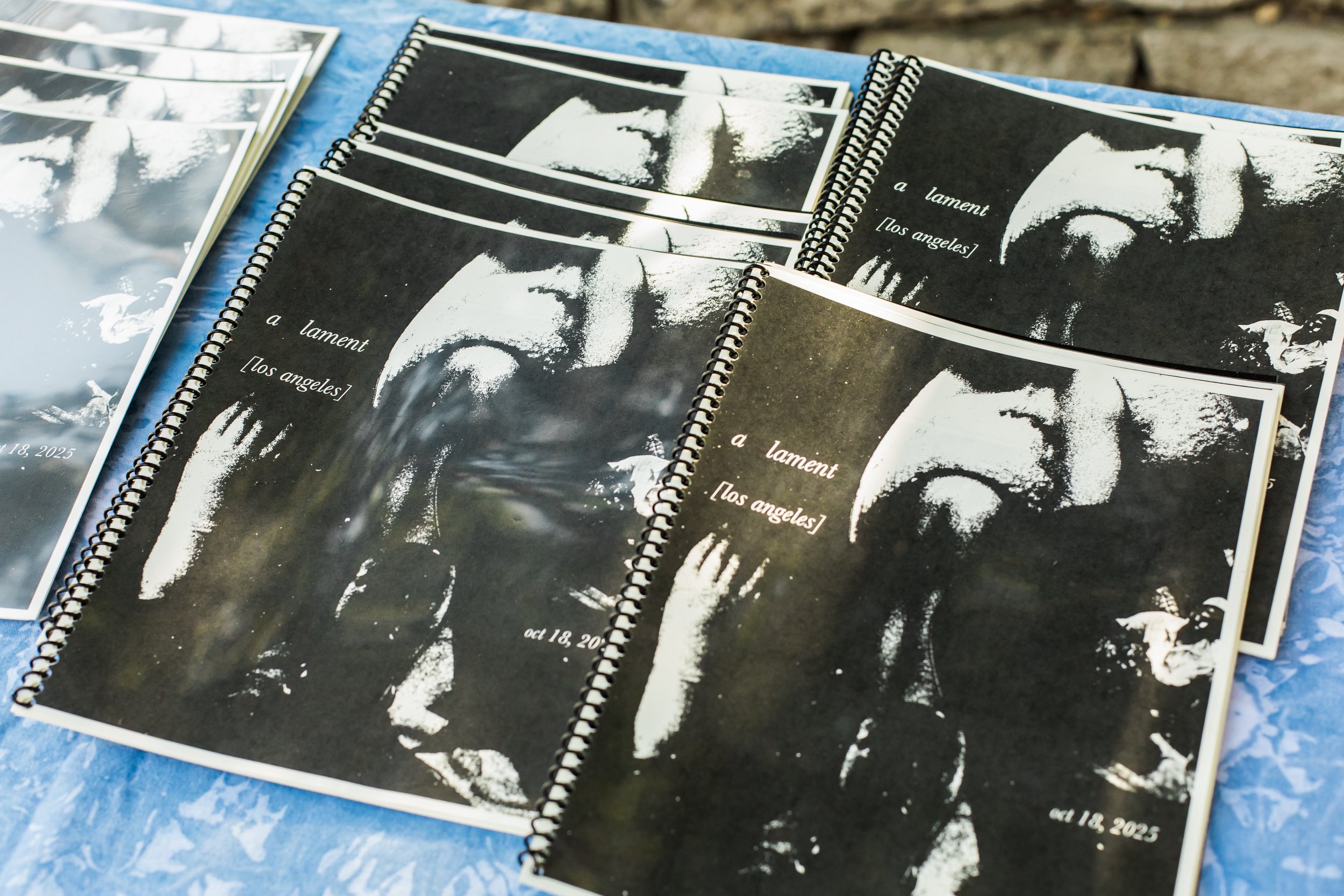
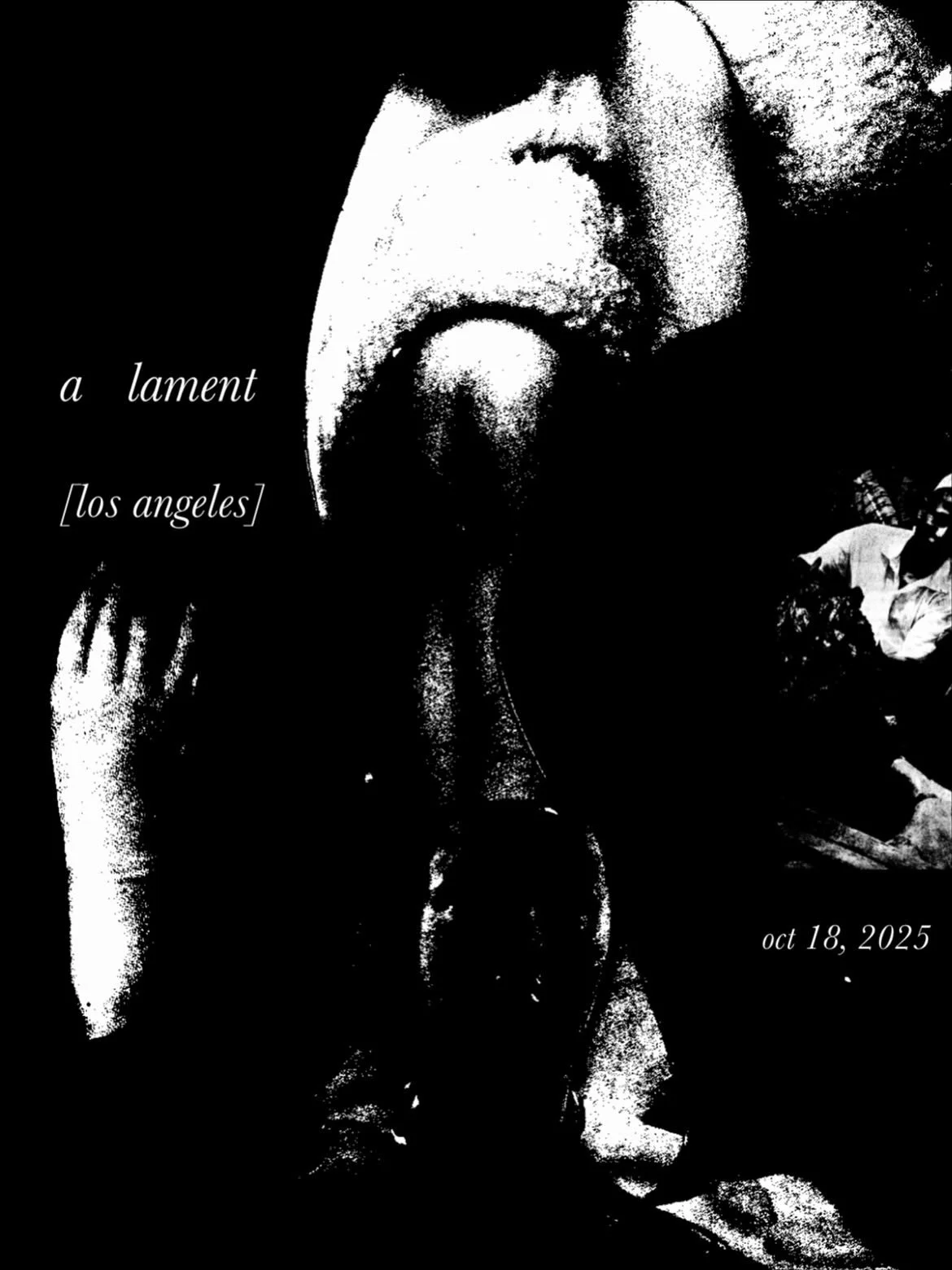
a lament [los angeles]
black belonging
〰️
black rage
〰️
black tenderness
〰️
black earth
〰️
black poetics
〰️
black belonging 〰️ black rage 〰️ black tenderness 〰️ black earth 〰️ black poetics 〰️
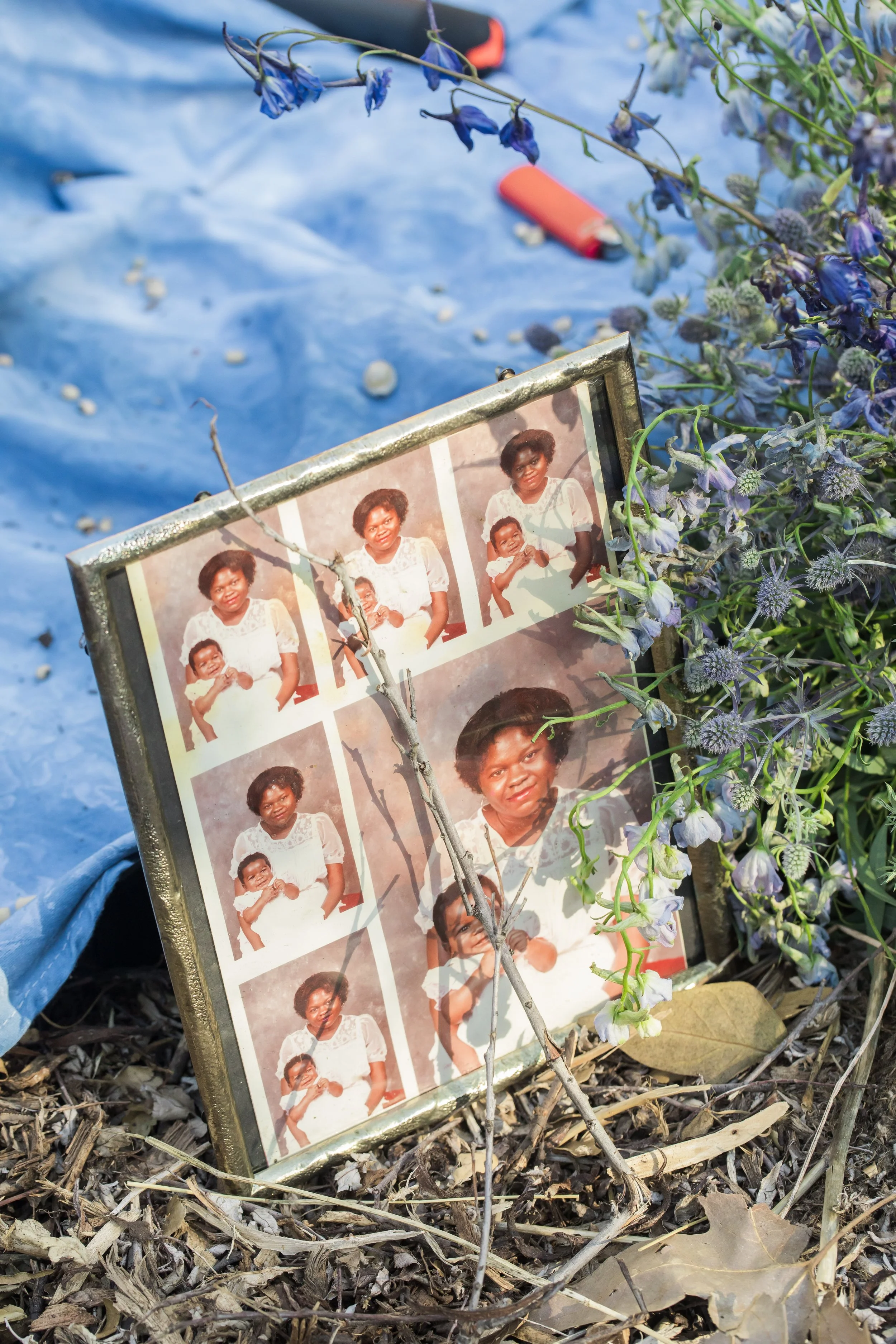
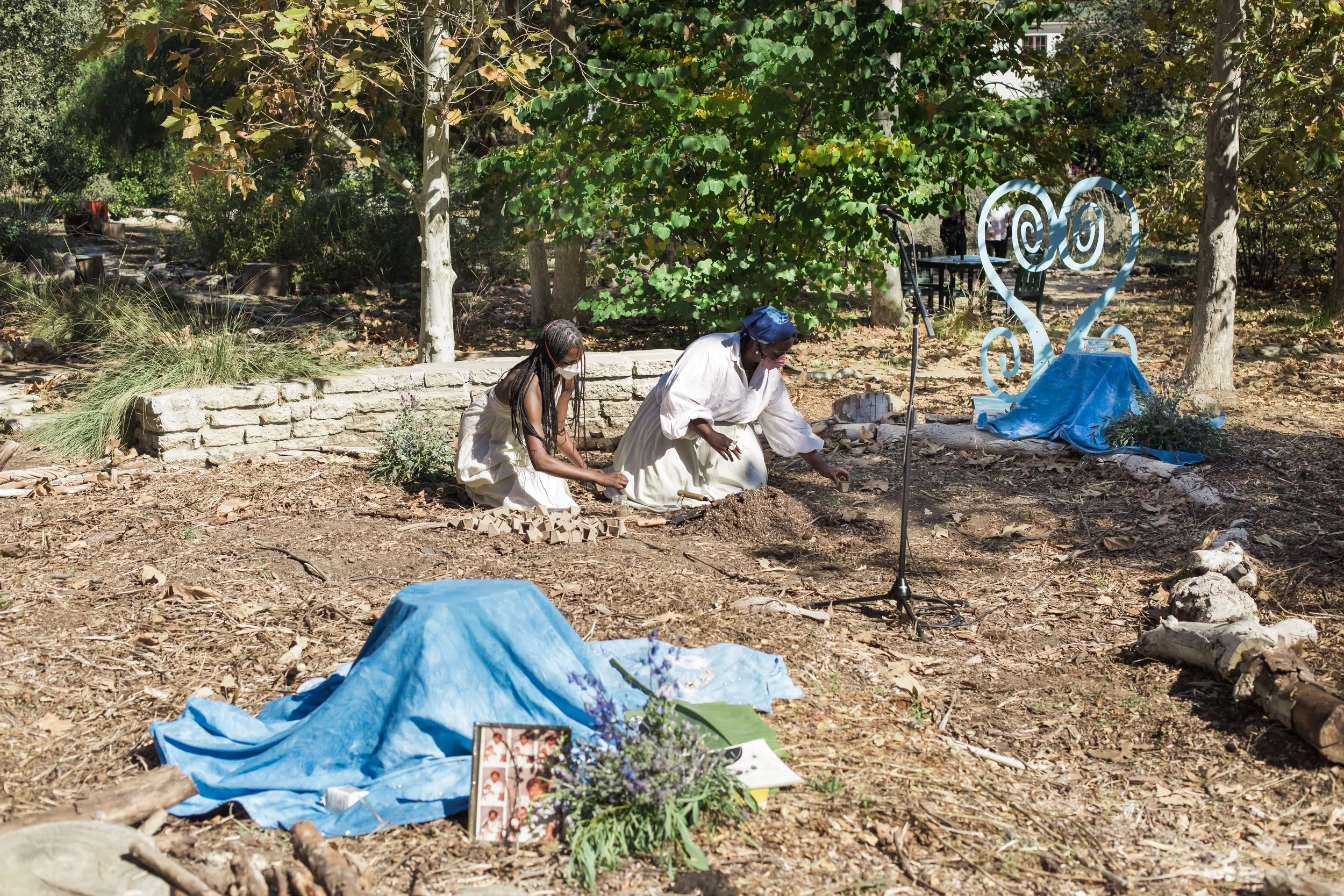
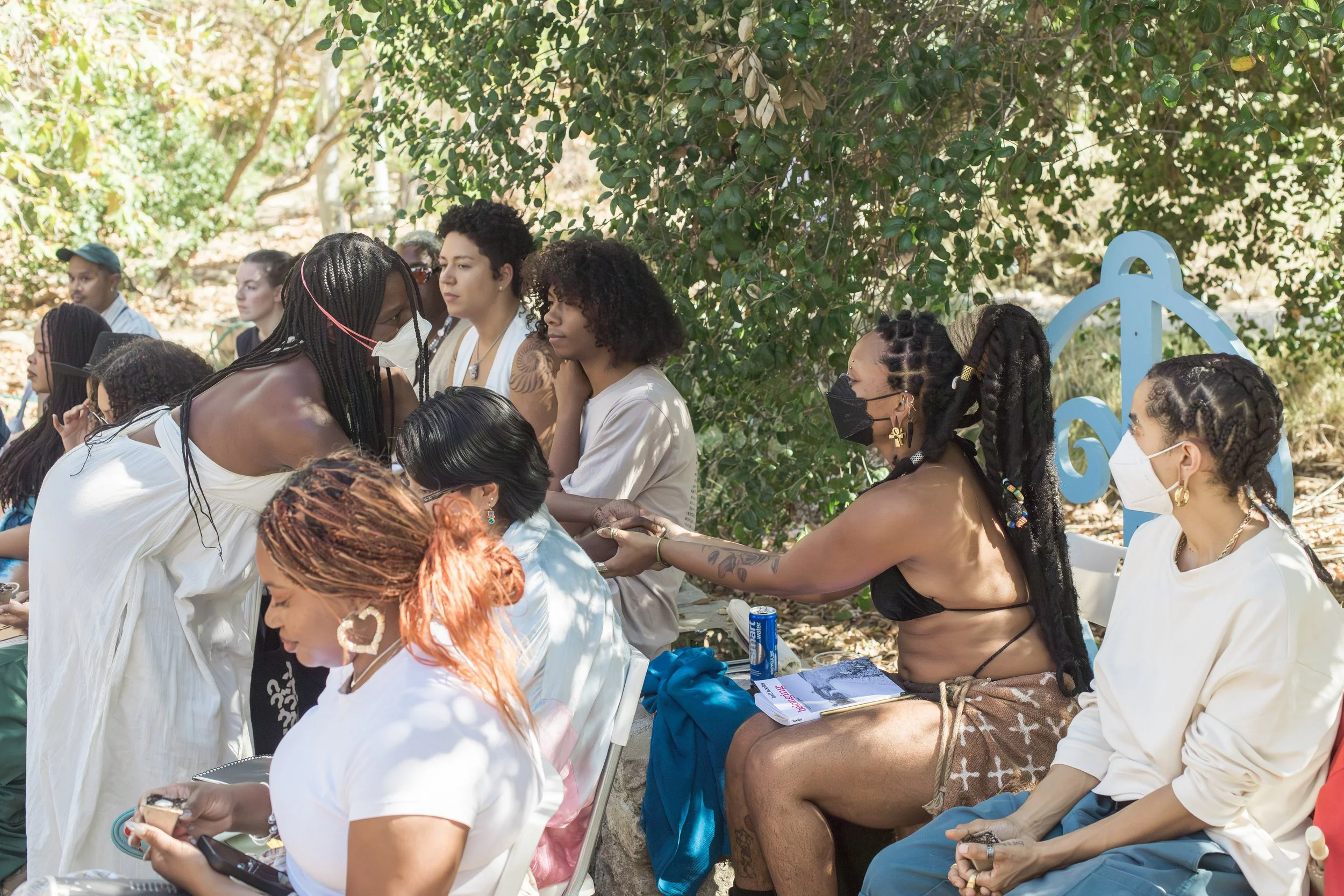
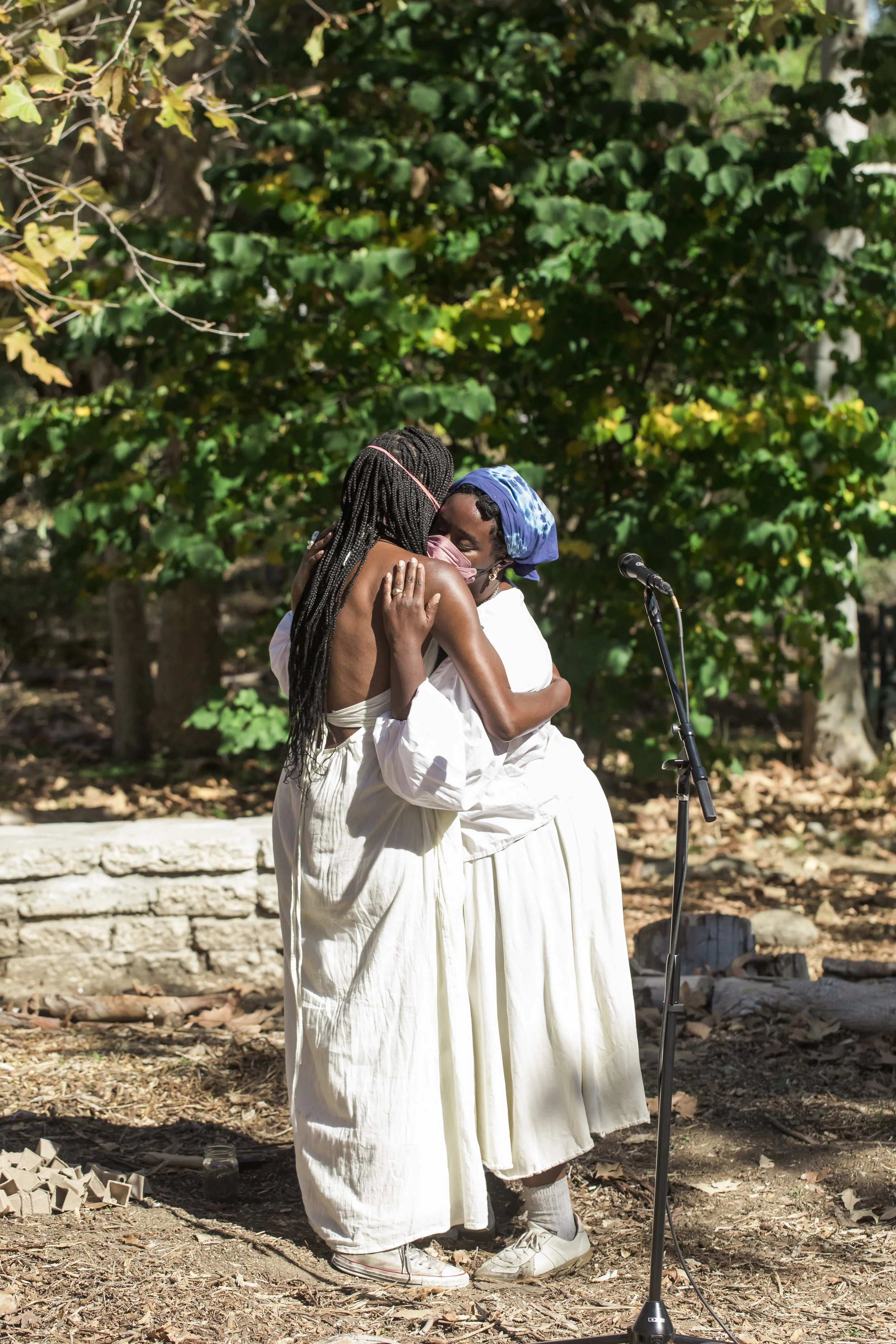
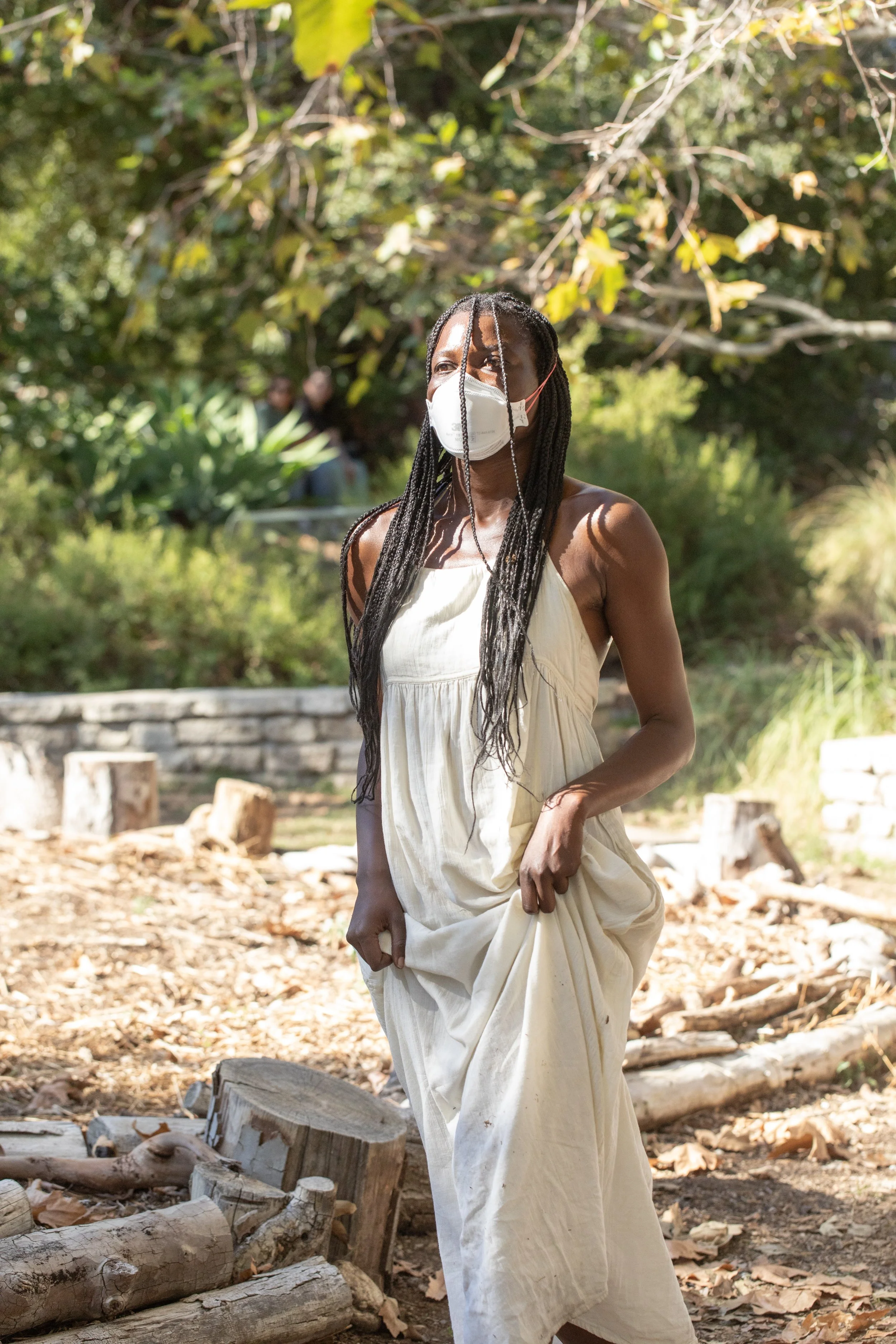
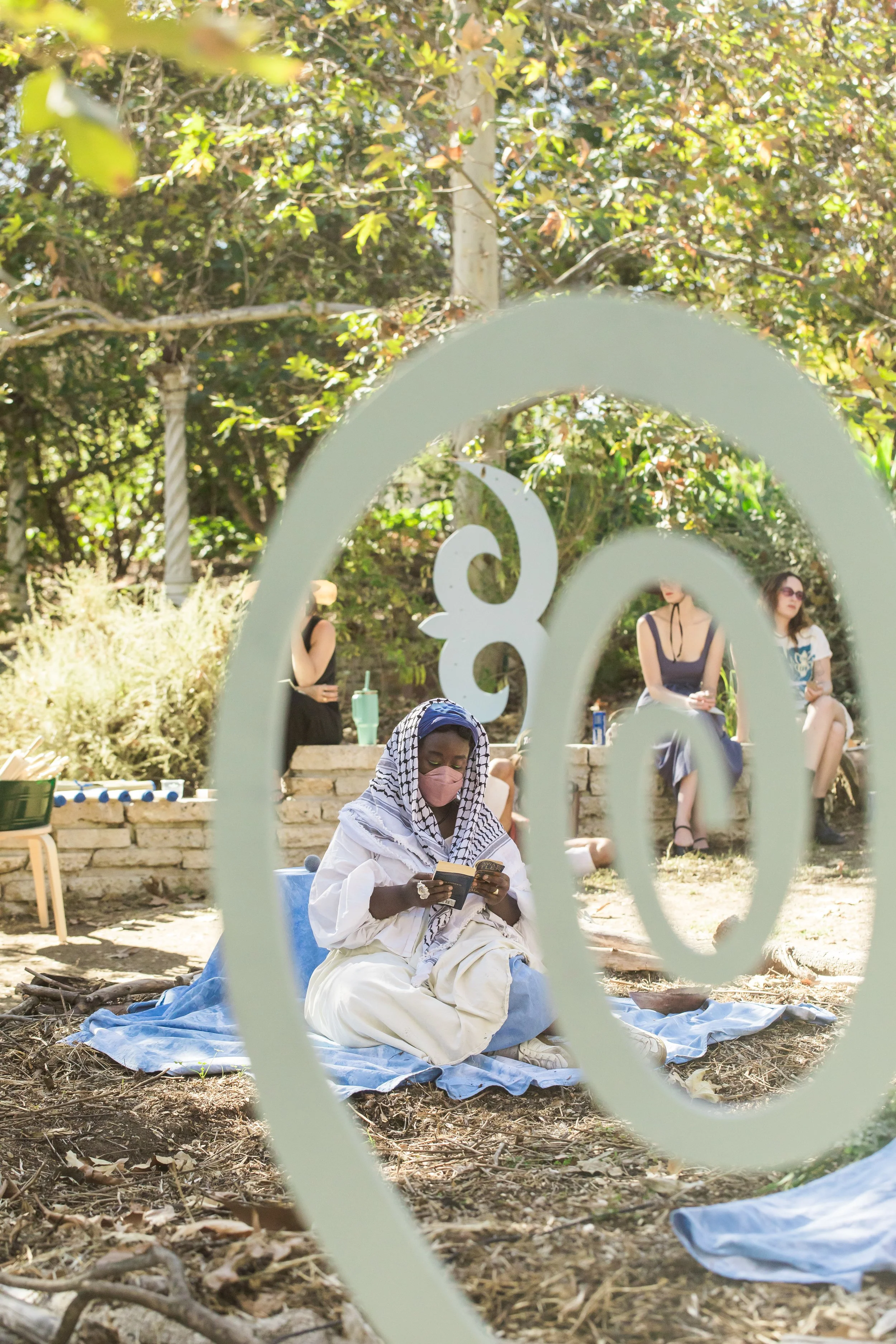
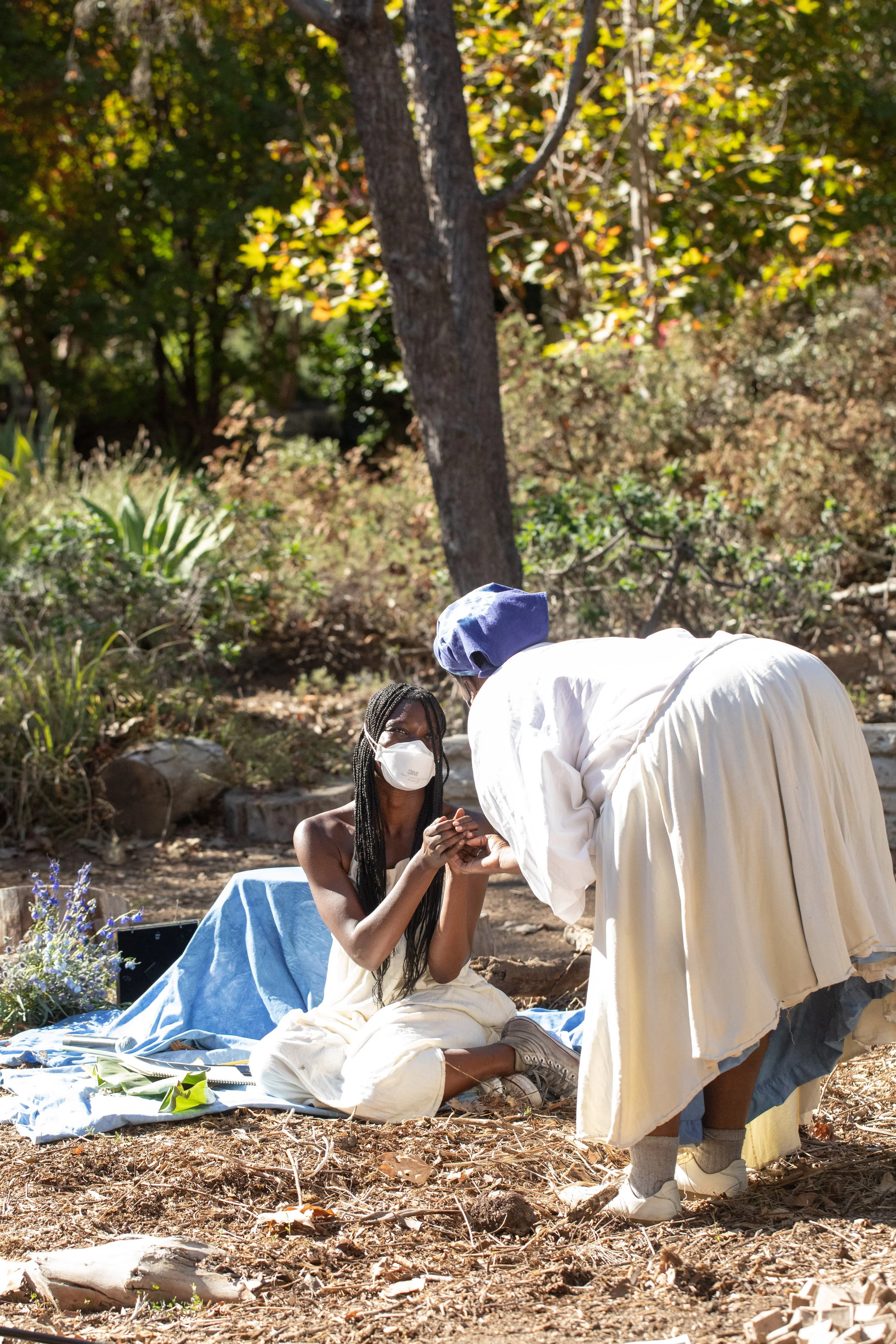
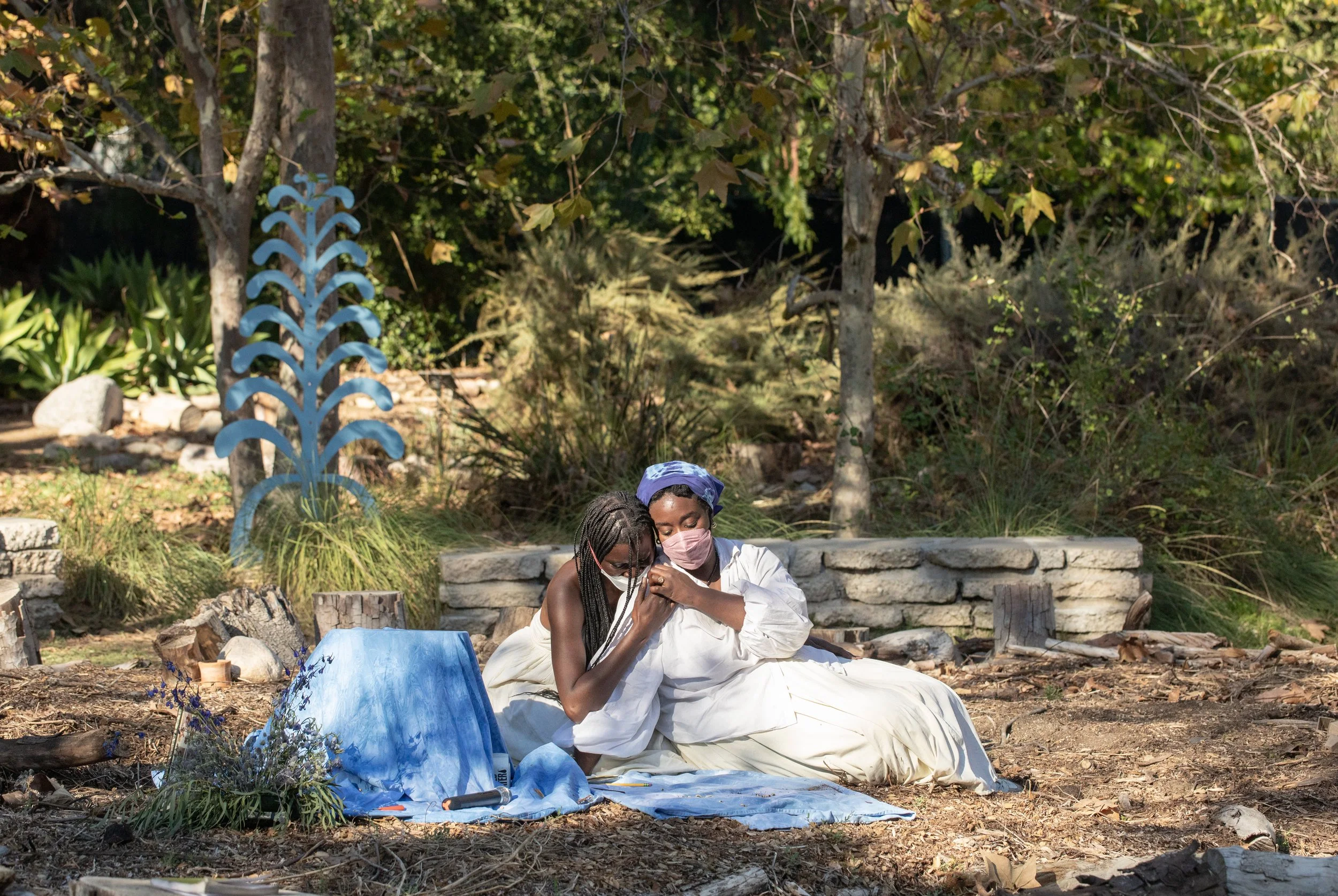
a lament [los angeles] was a performance, activation, and land work led by yétúndé ọlágbajú, developed in collaboration with Los Angeles Nomadic Division. Taking place on October 18, 2025 at Arlington Garden in Pasadena, the work gathered participants into an ephemeral, collectively held container (an “alternative monument”) for processing the urgencies of the present and imagining otherwise futures.
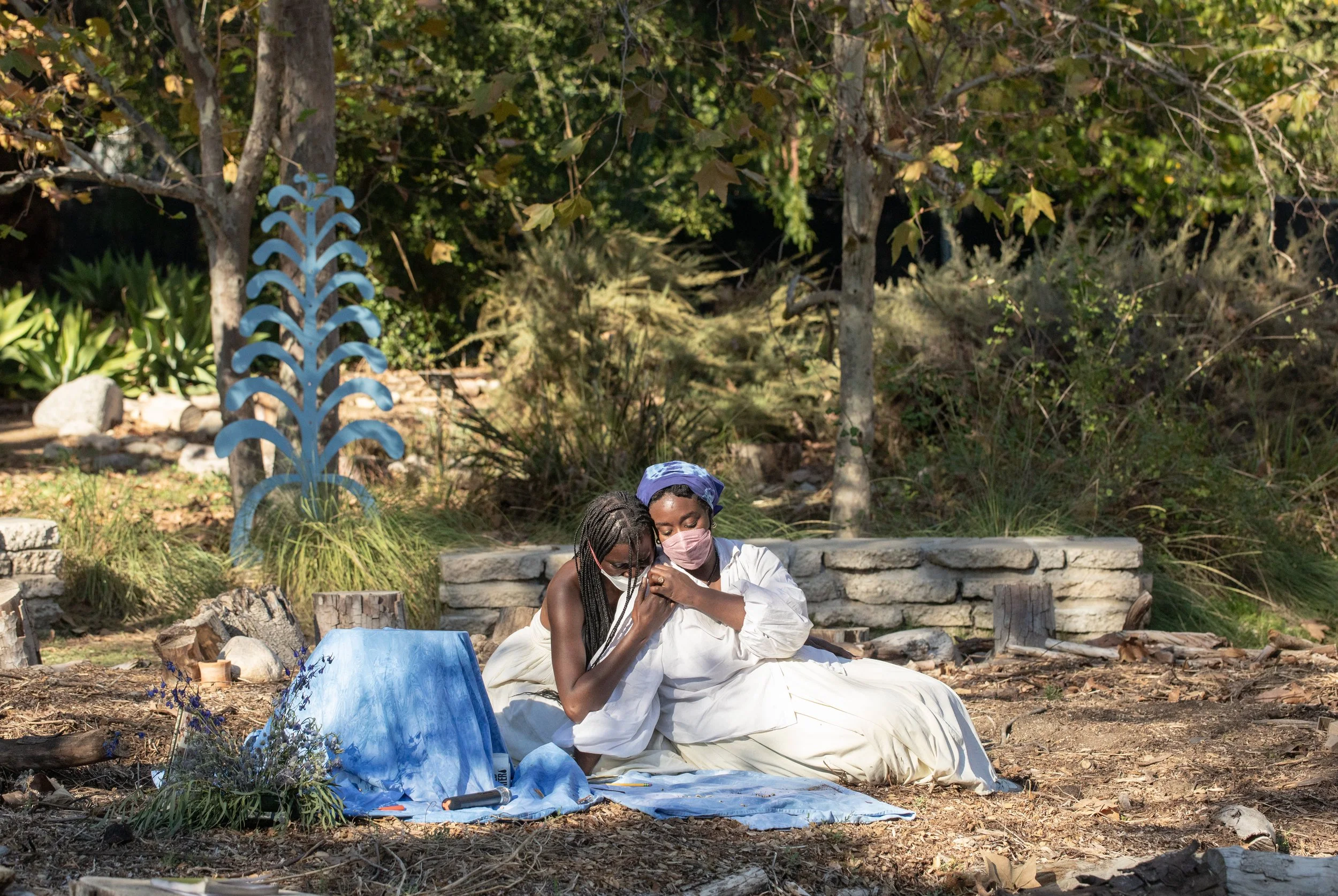
Rooted in a practice of lamentation, the activation drew from a distinction articulated by Dr. Tamisha Tyler: “to lament is to name the dissonance between the world as it is and the world that should already be here, while grief inhabits the emotional terrain of that gap”.
Building on this framework (and inspired by a slow reading of Parable of the Sower) a lament [los angeles] created space not only to feel loss, but to publicly name, witness, and directionalize it.
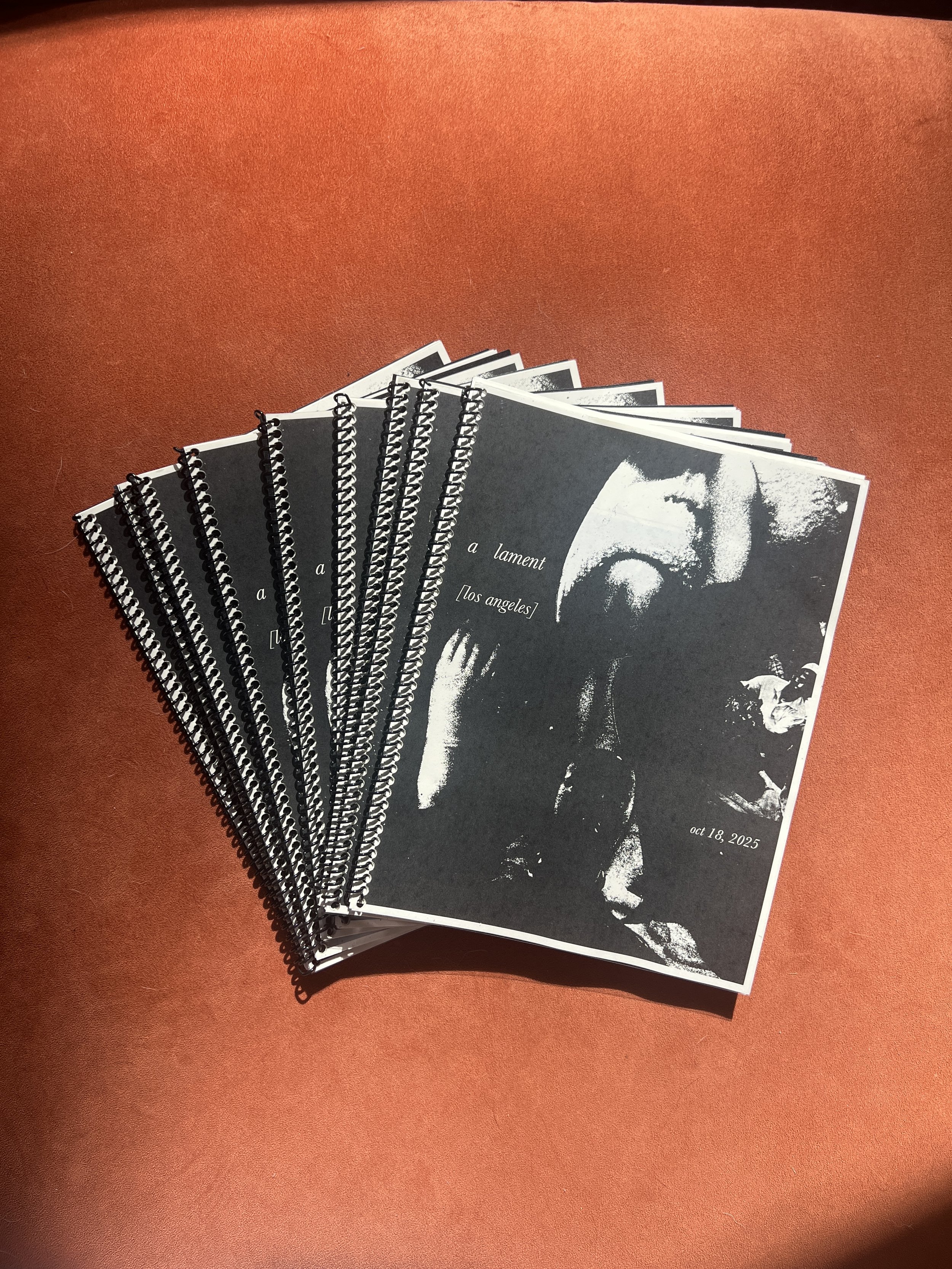
Central to the work was a performance score and compendium, which guided the unfolding of the activation while offering participants a set of prompts, texts, and materials to engage their own processes of lamentation, reflection, and imagining.
Through an open forum, participants were invited to offer lamentations, grief, prayers, songs, and visions for new world(s). These offerings unfolded within a site-responsive environment marked by sculptural Adinkra-inspired forms that acted as both guardians and collaborators, sounding through wind and movement. The work centered Queer, Black, and Indigenous expressions of collective experience, holding space for the layered impacts of white settler colonialism, racialized capitalism, ecological crisis, and spiritual displacement.
The gathering was further shaped by offerings from invited speakers and community leaders, including Helen Peña, Dr. Tamisha Tyler, Sonia Guiñansaca, Tægen Meyers, Ashley Blakeney, Alexander Catanzarite, Kyla Carter, and Astrid Kayembe, whose contributions of text, voice, and presence deepened the collective process of lamentation and reflection.
An accompanying audio work, created by ọlágbajú, Titania Kumeh and Nana Boateng, wove together field recordings gathered by the group with archival materials and literary excerpts. The soundscape layered voices and texts by Assata Shakur, Nikki Giovanni, Maria Hamilton Abegunde, ashia ajani, Vanria Butler, Tammy Greer, Jayson Maurice Porter, and others, creating a resonant sonic field that moved between past and present, memory and immediacy.
Extending beyond the physical bounds of the garden, the activation was transmitted via radio, allowing its frequencies — its calls, ruptures, and offerings — to travel across distance, reaching human and more-than-human listeners alike. In this way, a lament [los angeles] operated simultaneously as gathering and broadcast, intimacy and expansion.
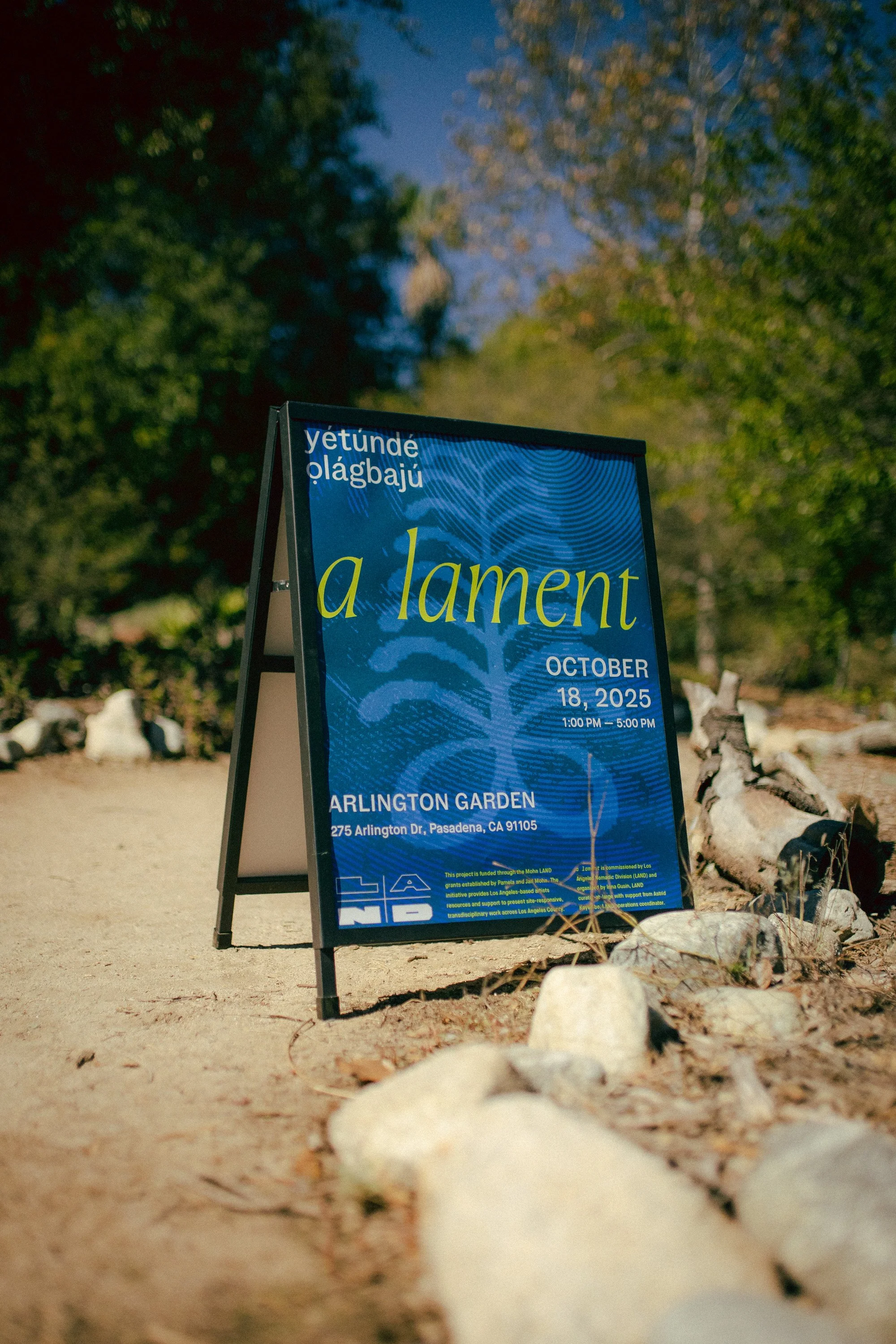
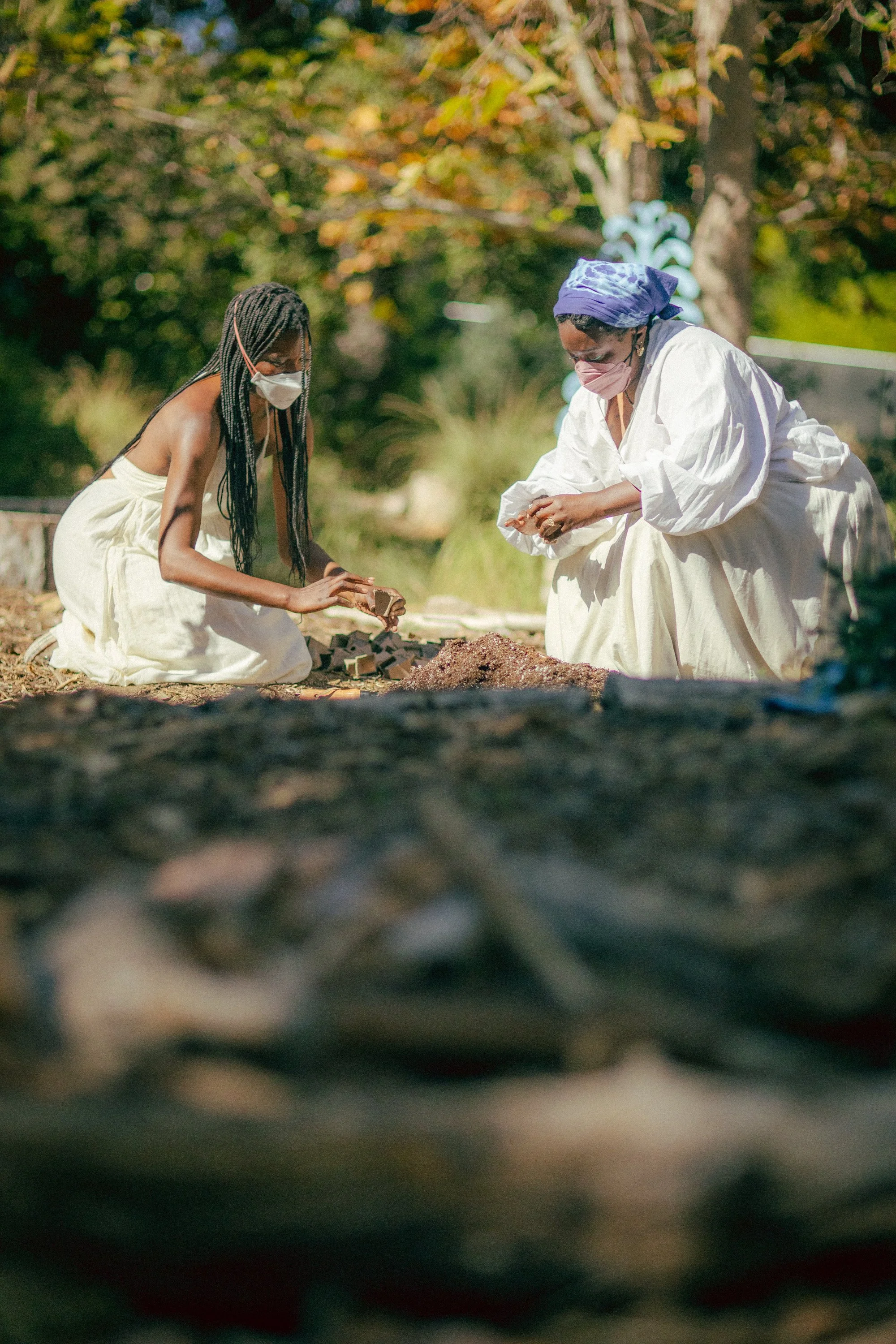
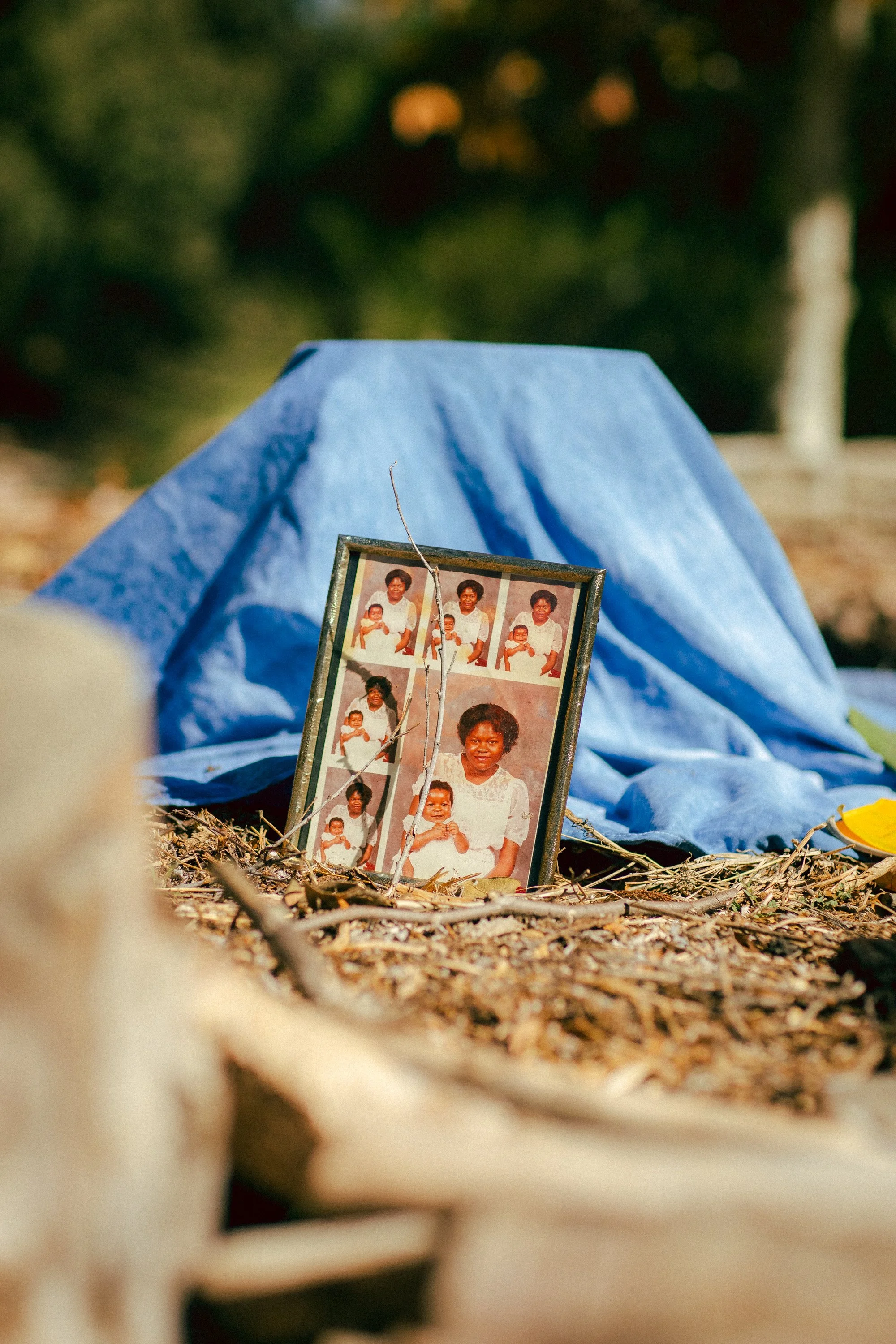
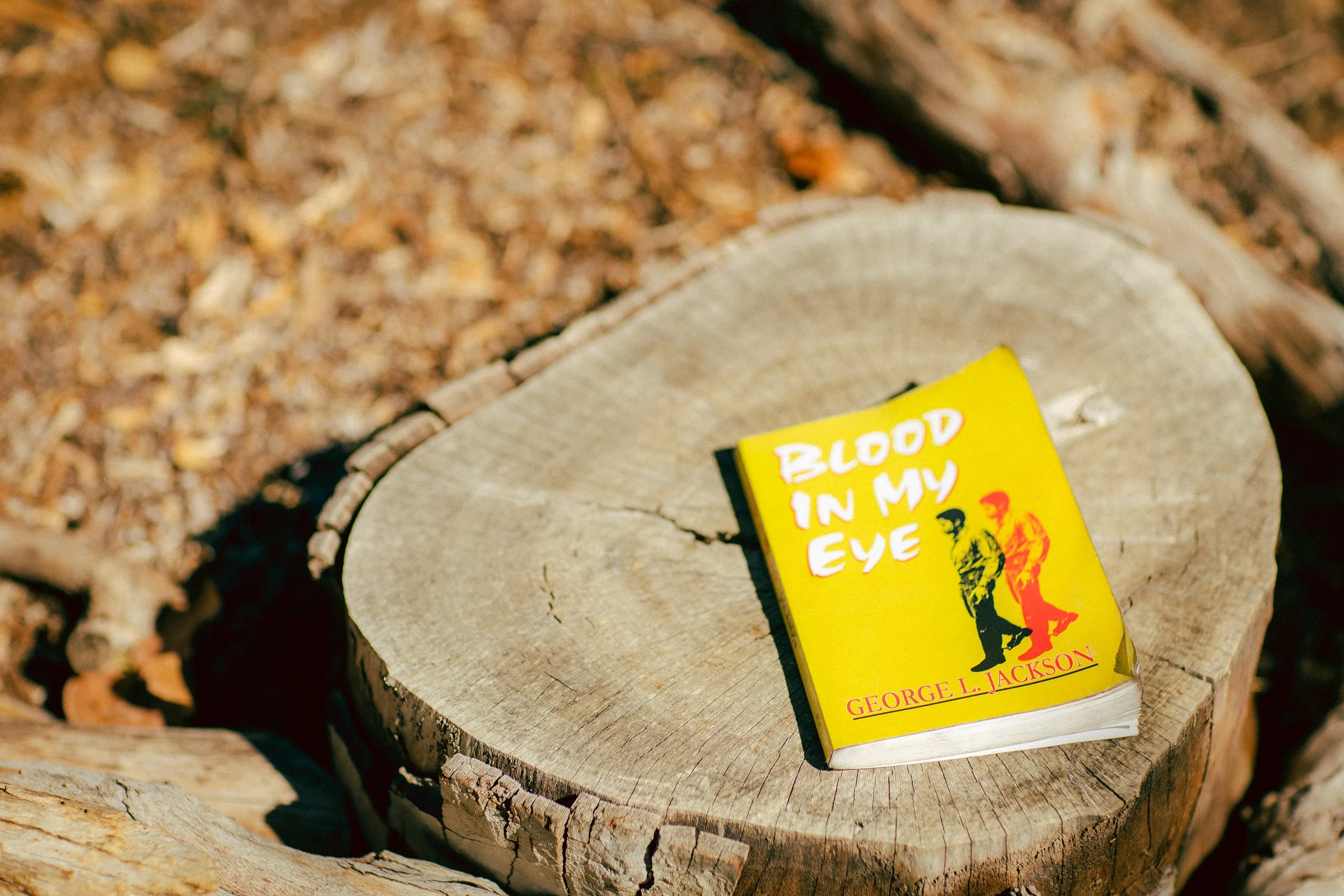
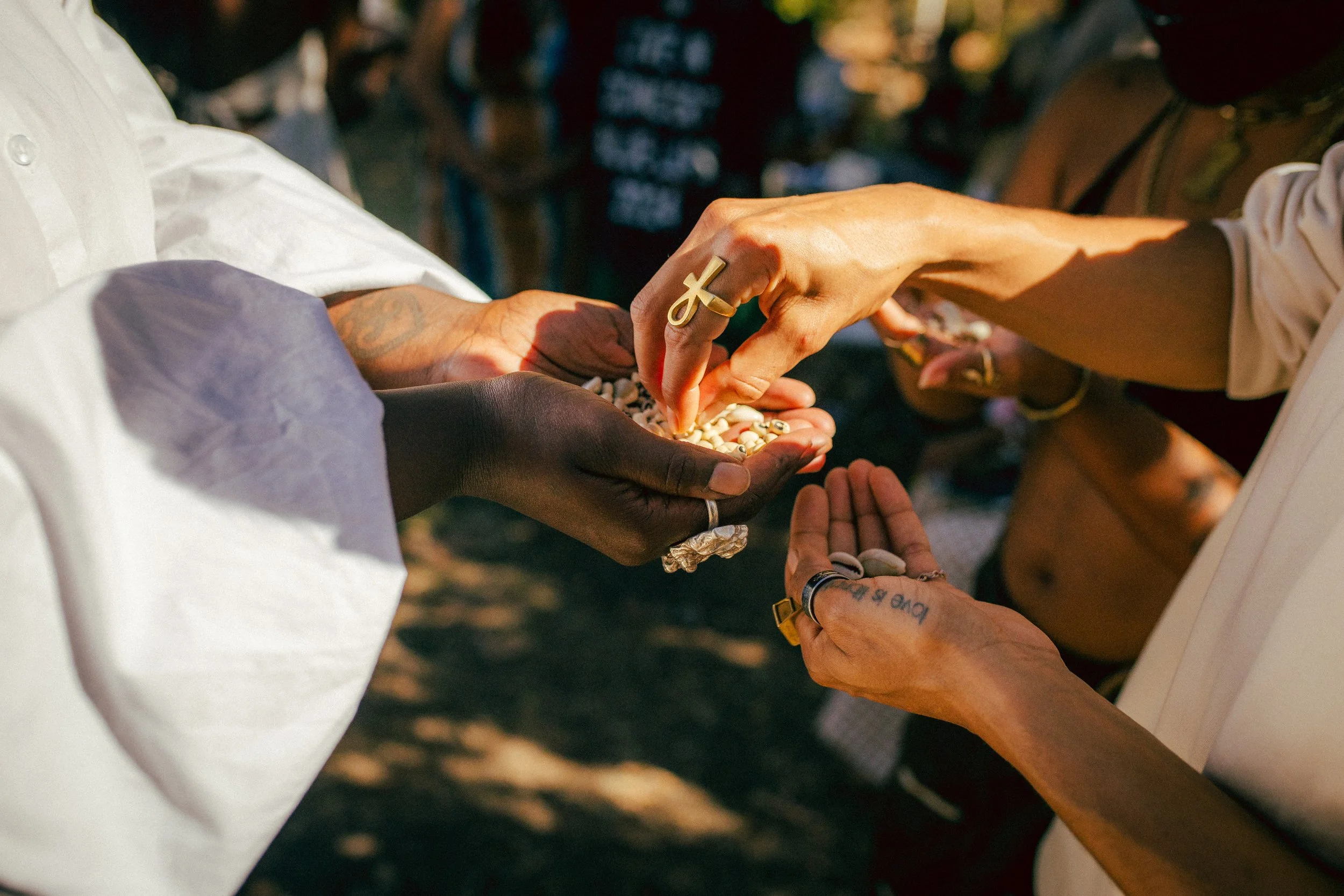
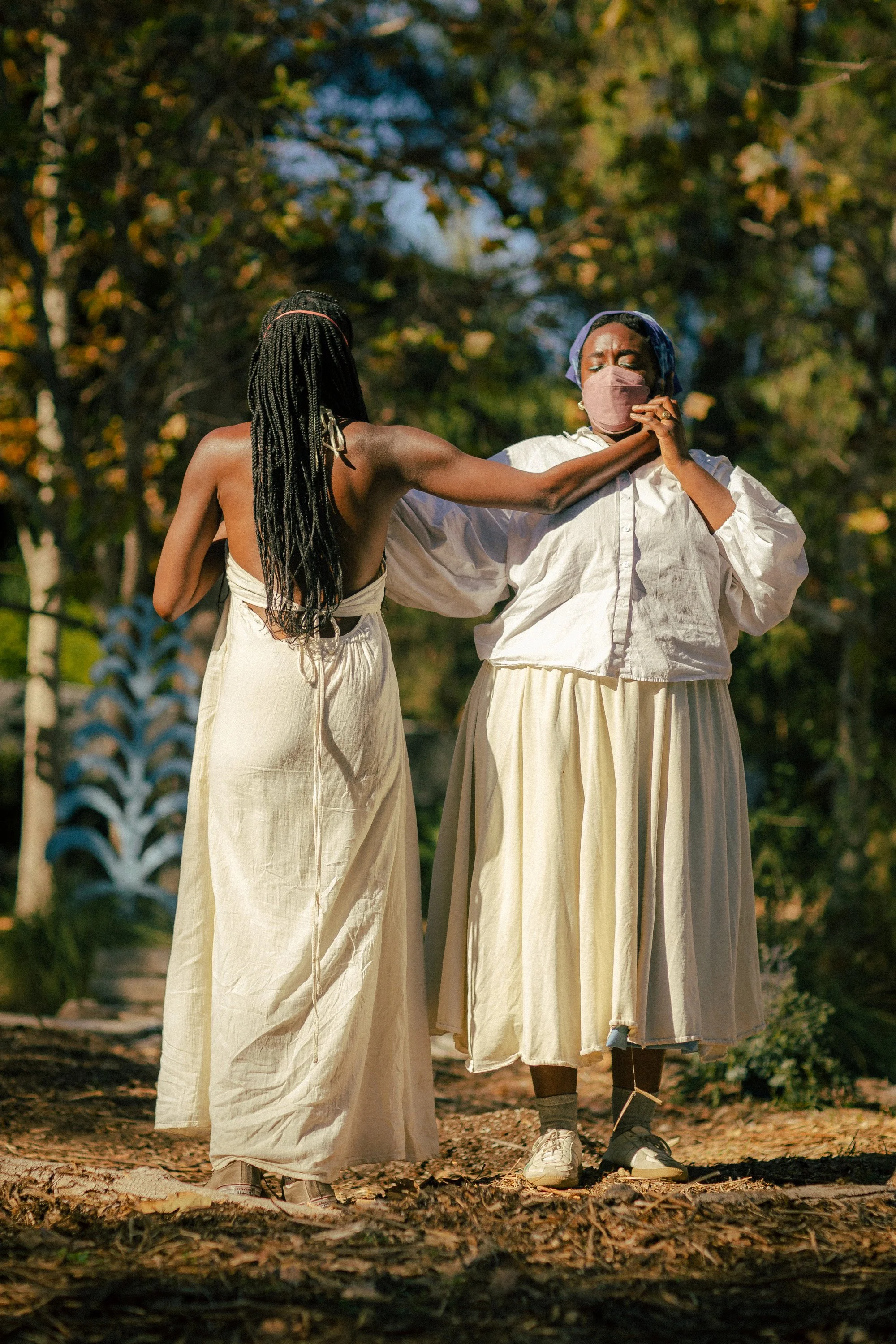
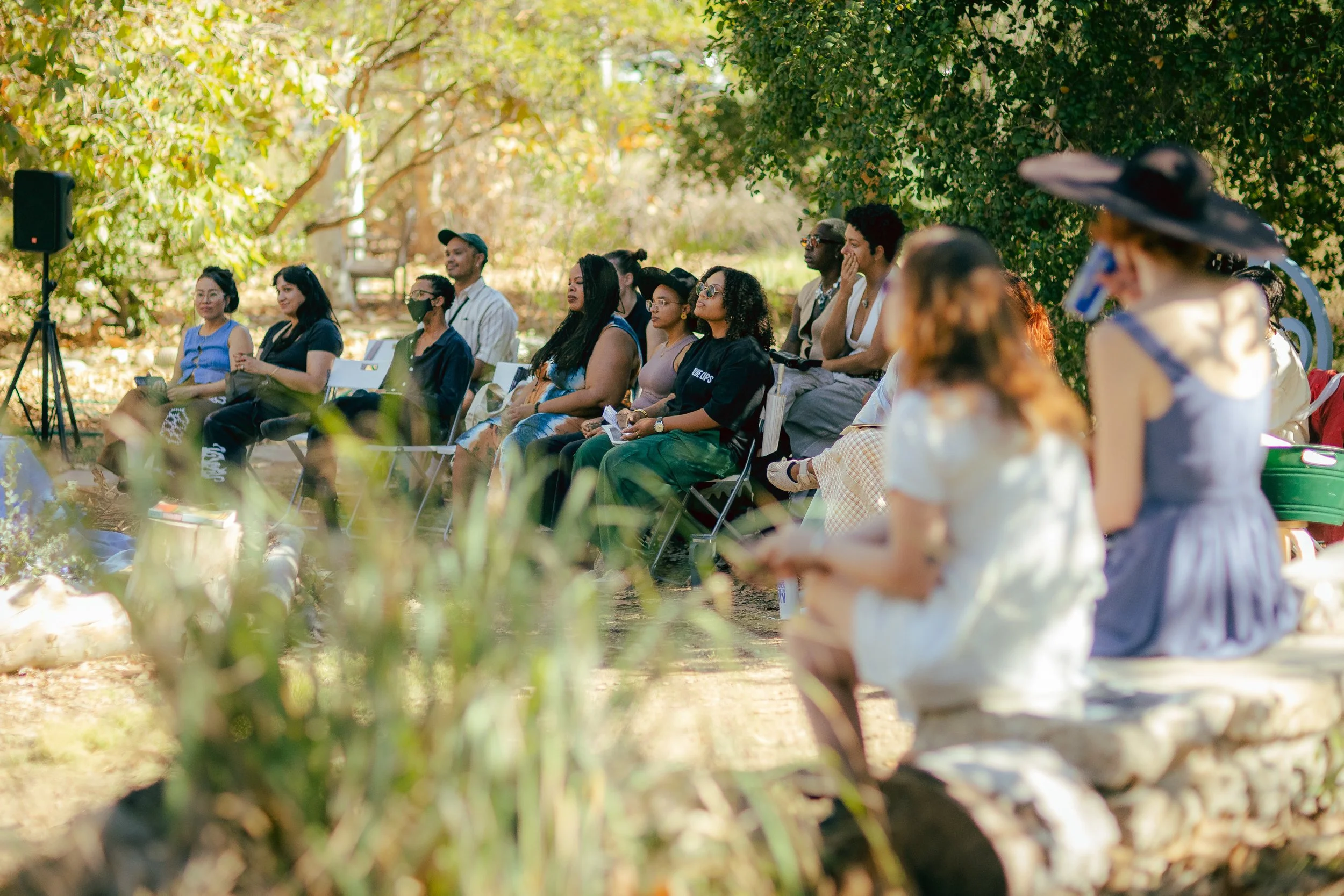

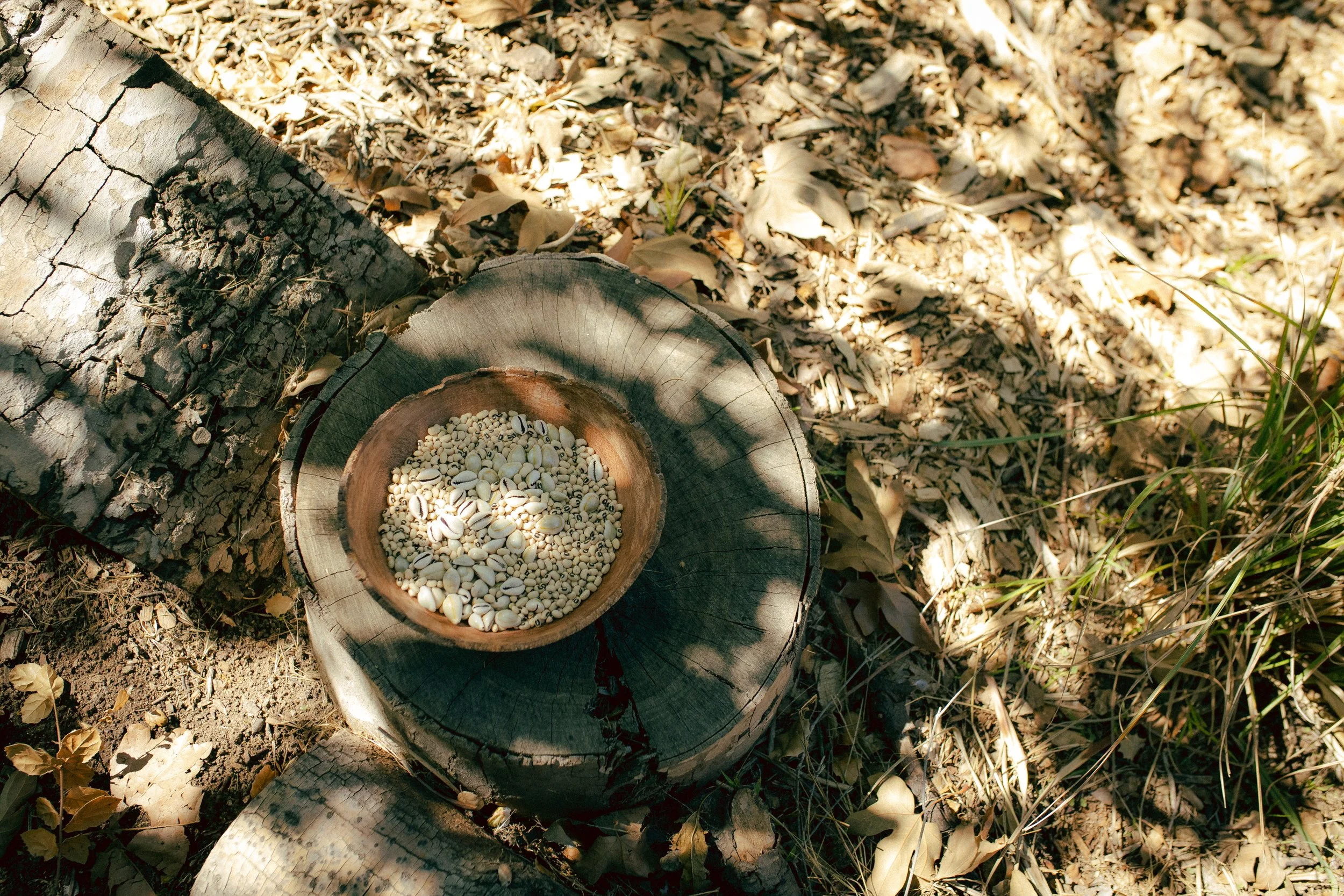
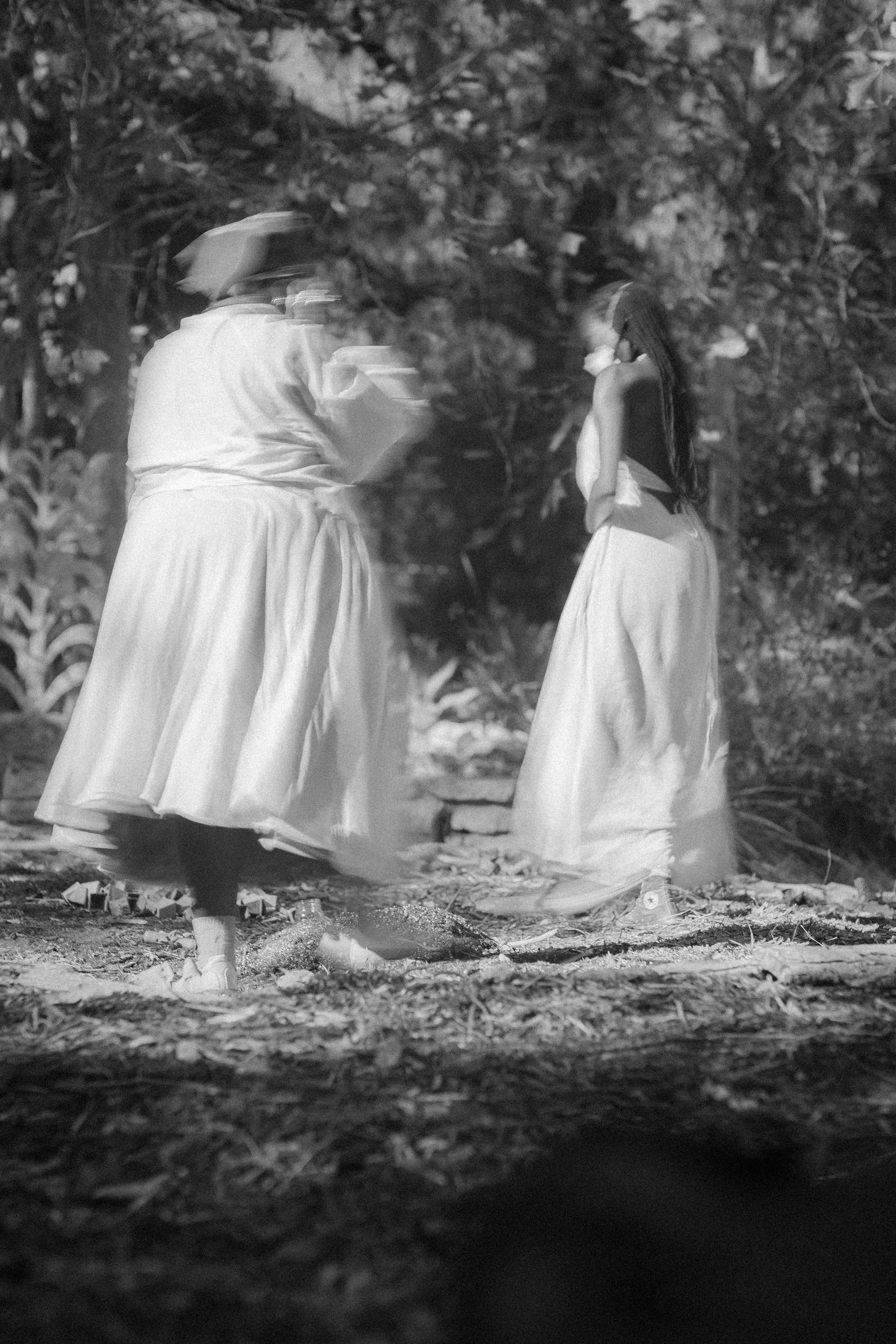
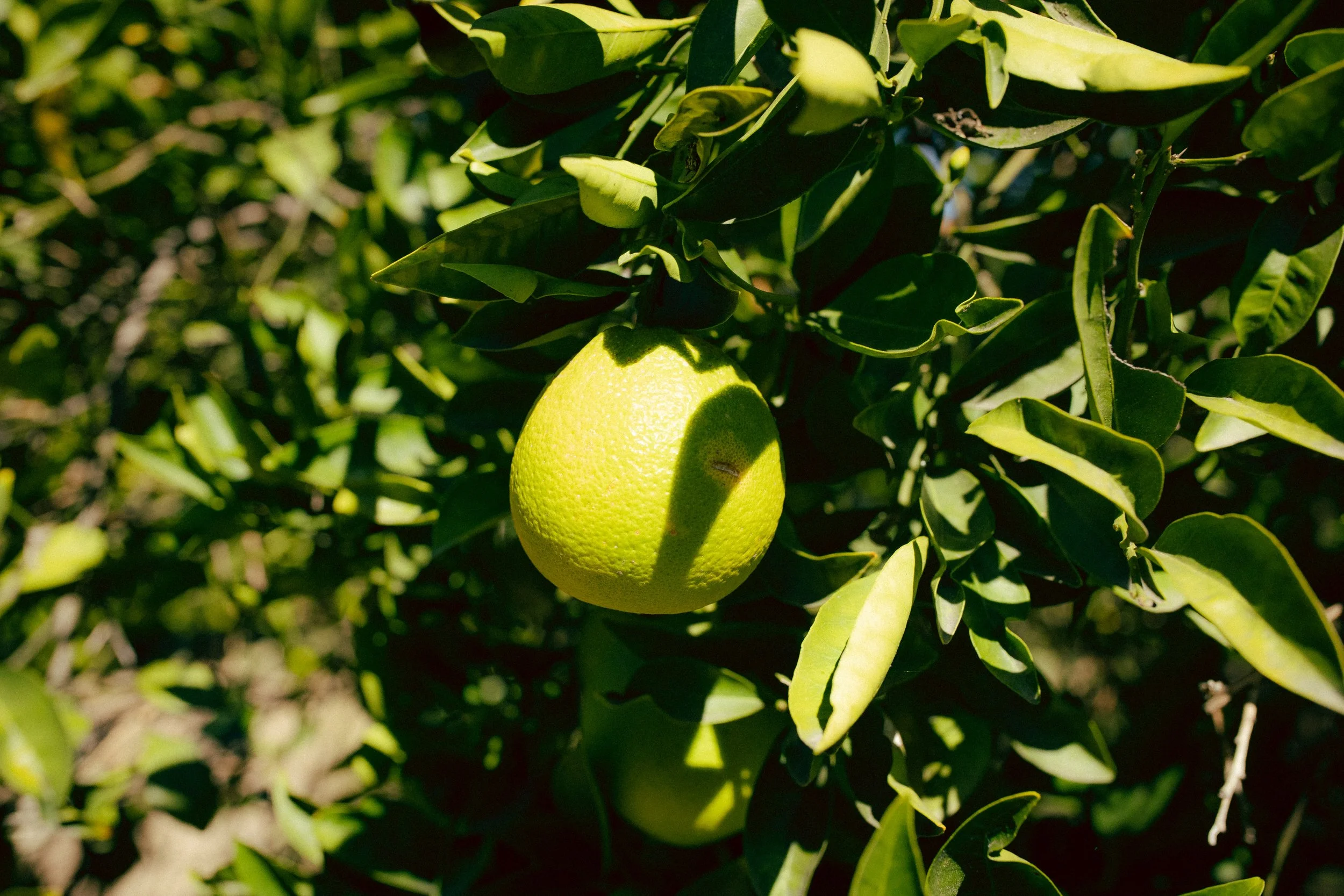
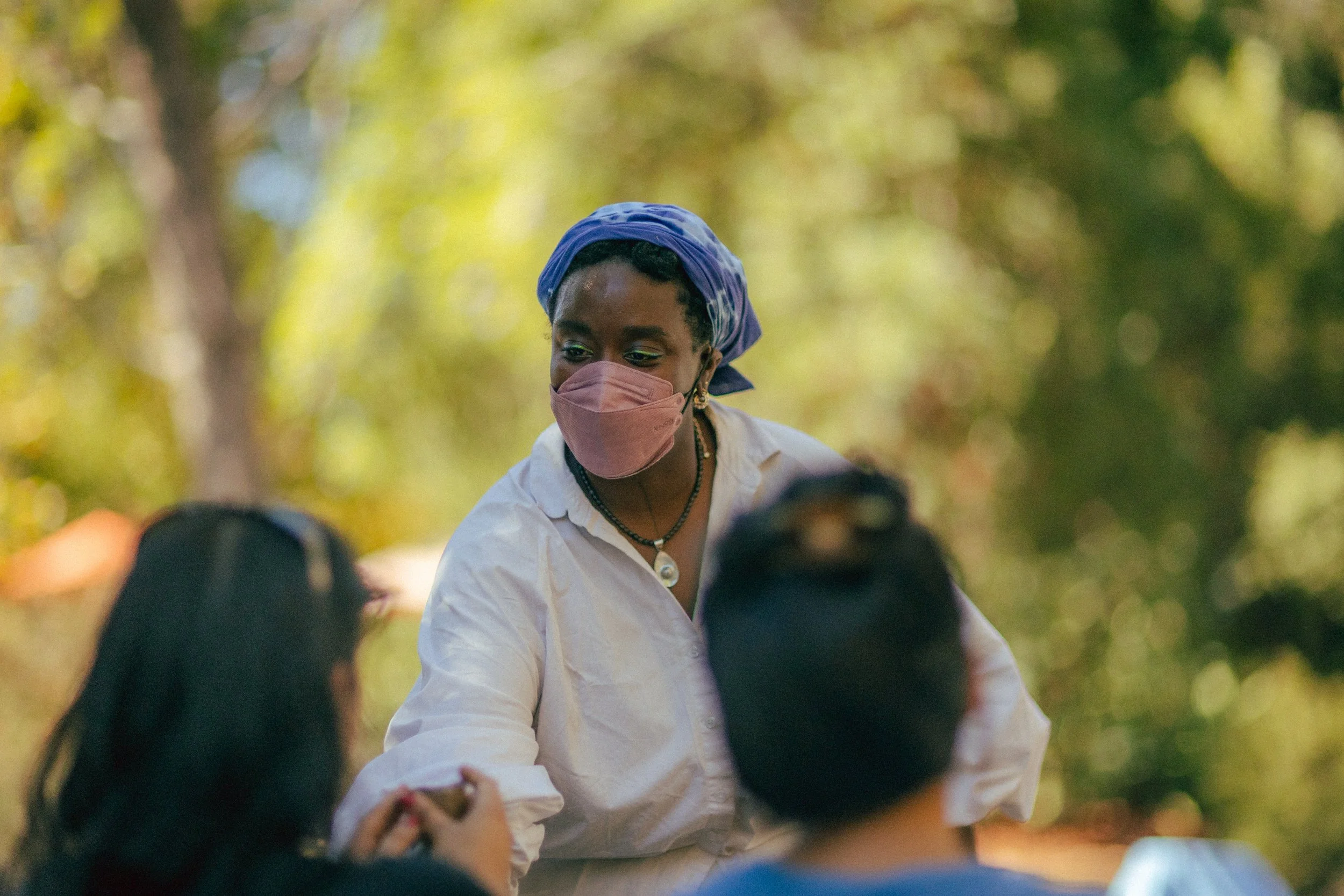
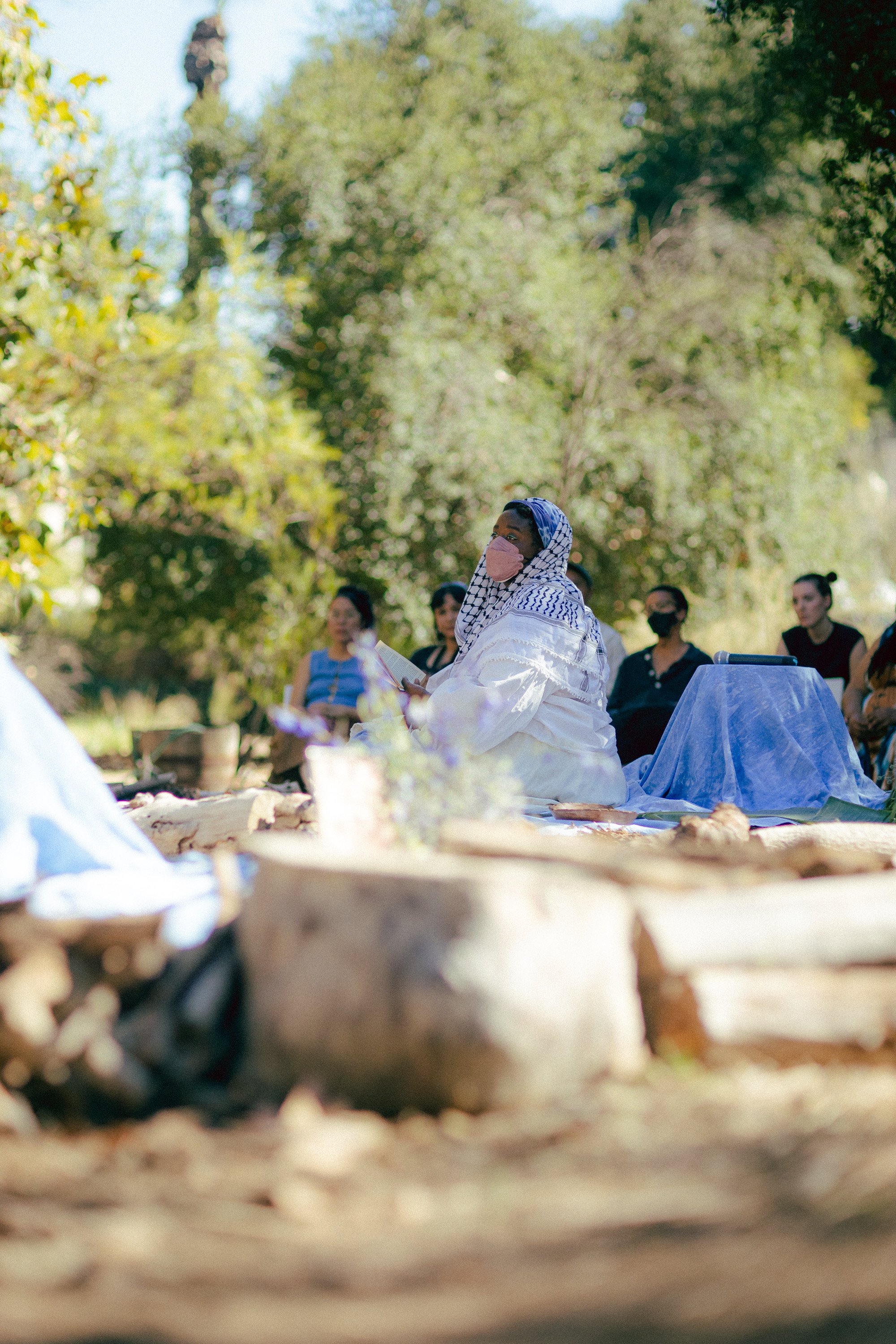
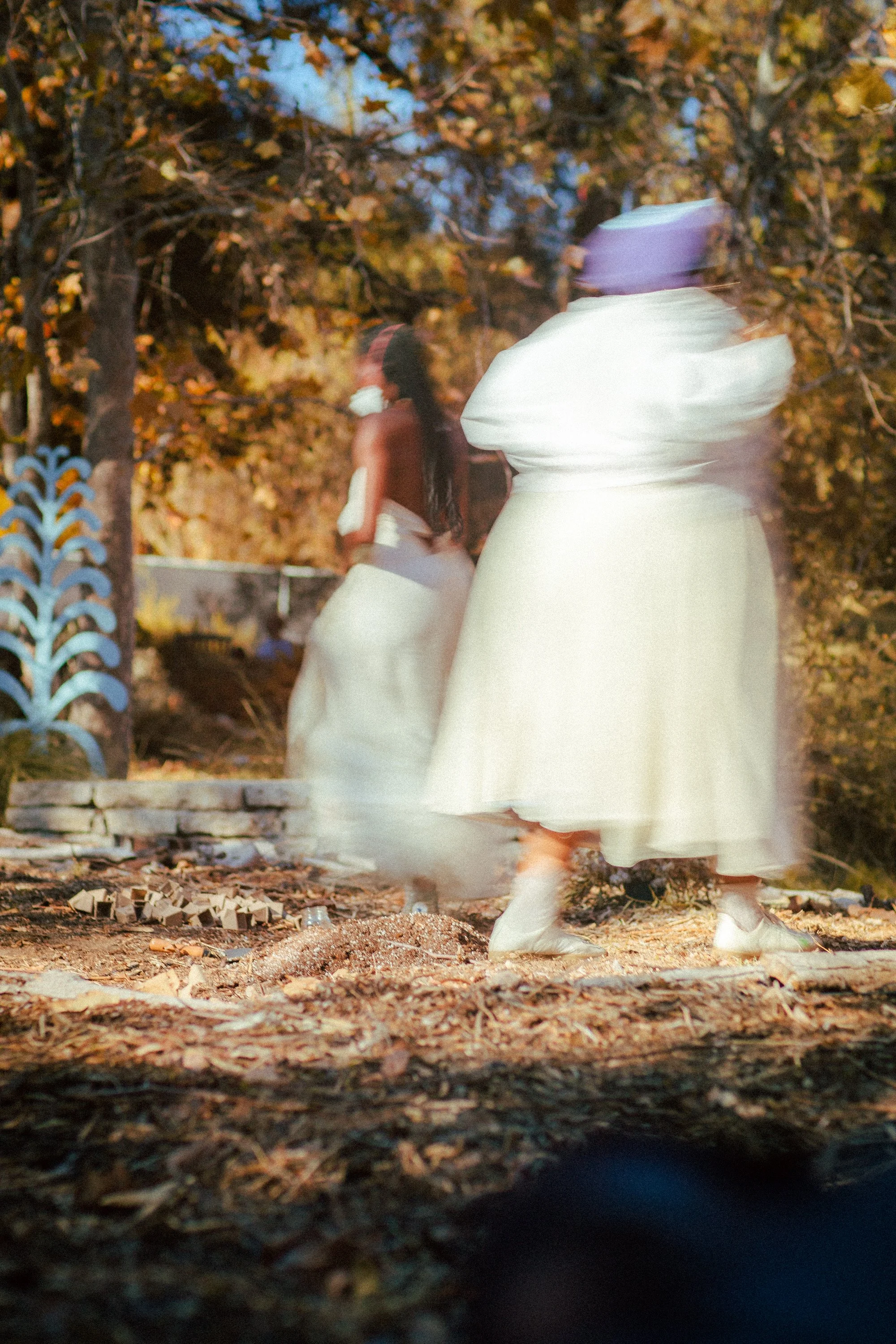
images by Yemi Seyi
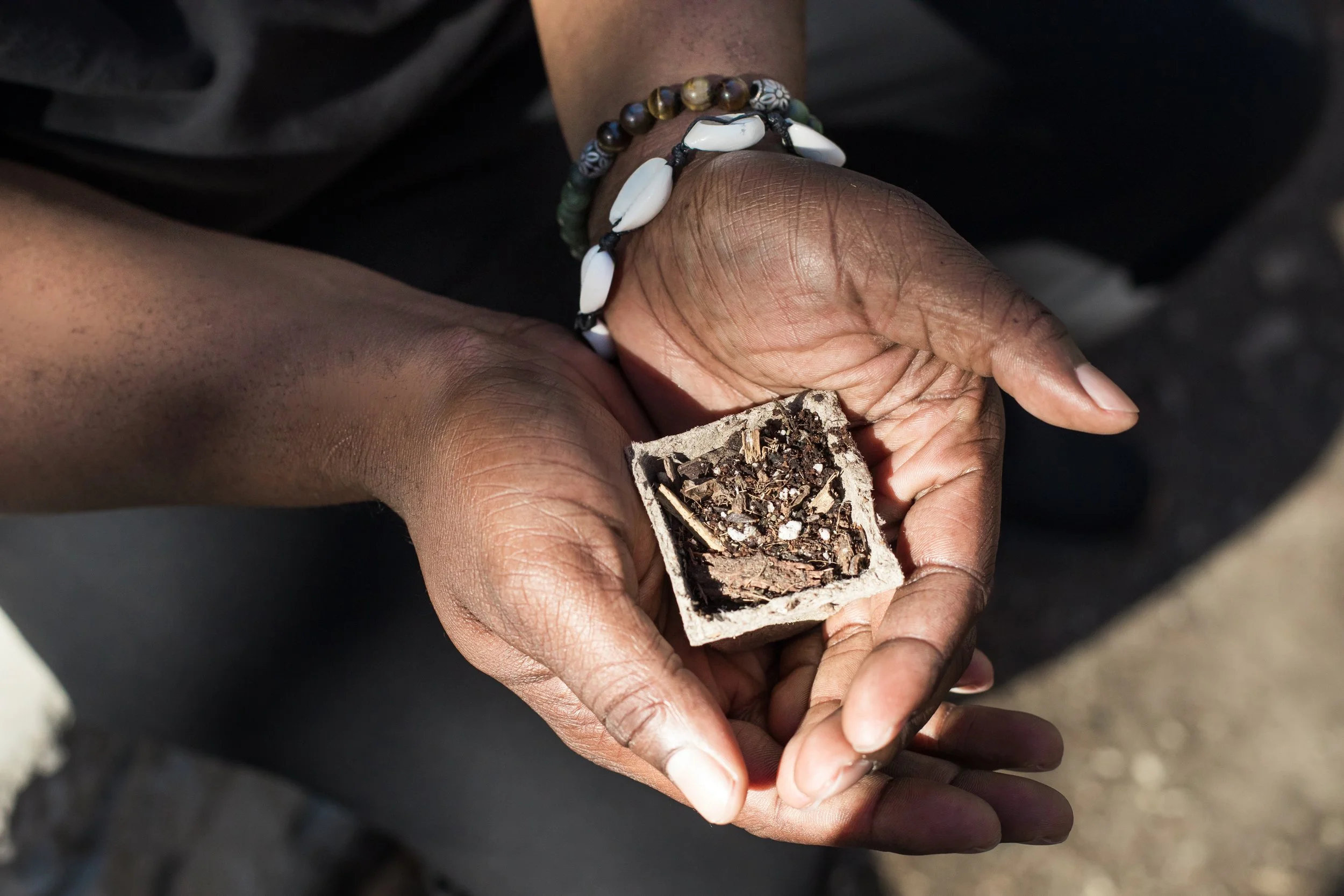
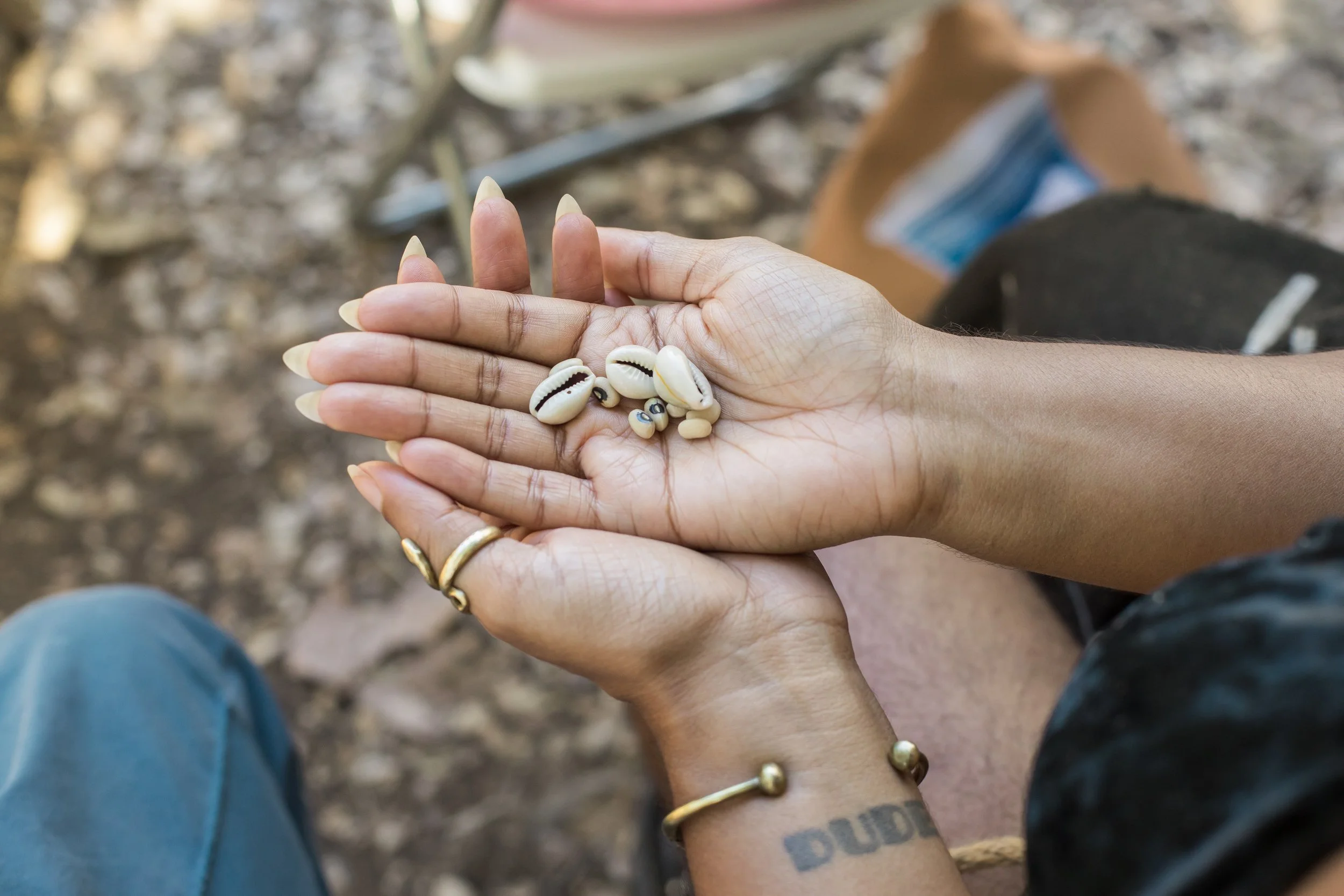
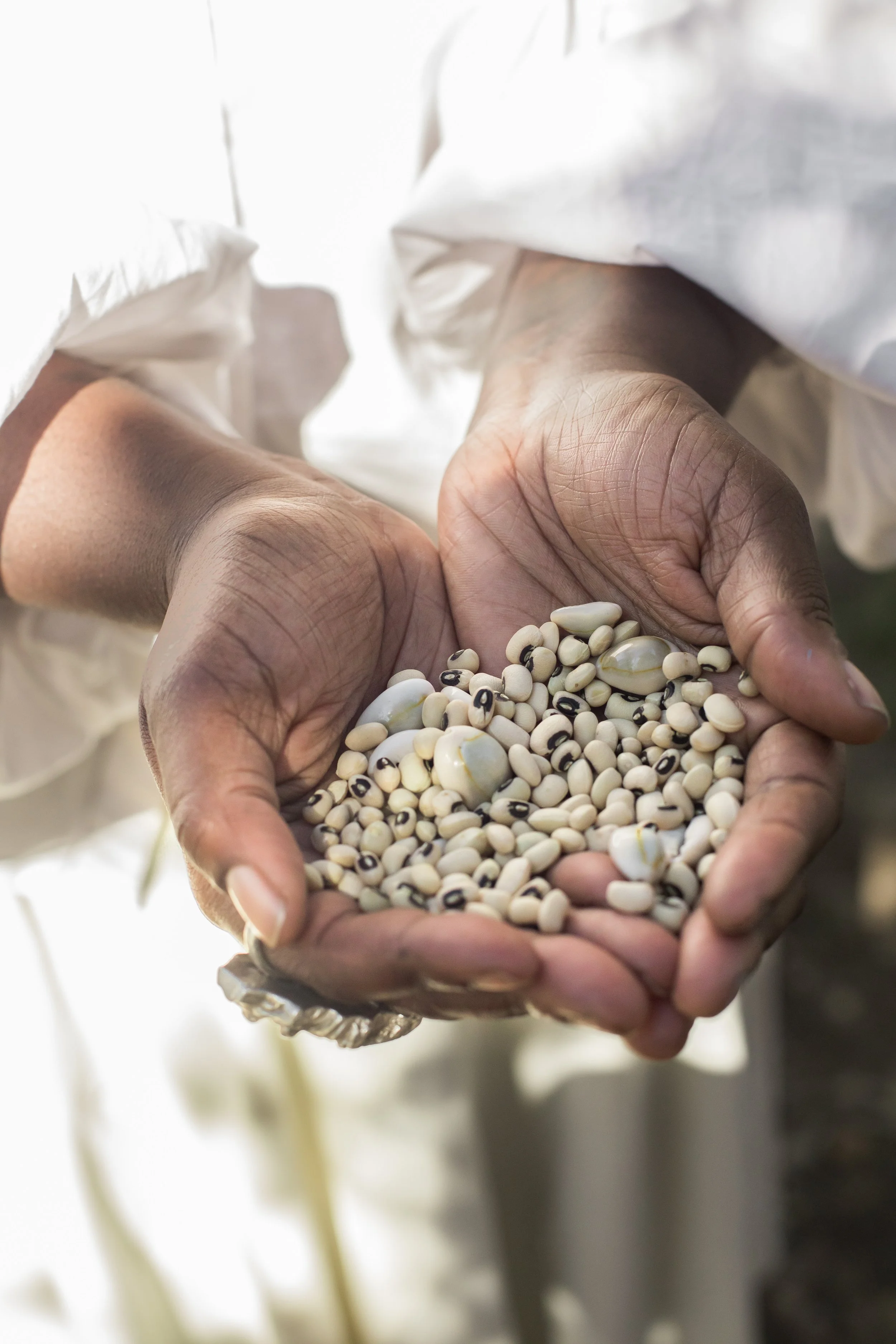
Stewarded ceremonially by ọlágbajú and Titania Kumeh, the work held an intentional container for arrival, participation, and release. Attendees were offered materials — including the zine, writing tools, and seeds — as invitations to reflect, carry, and cultivate their own visions forward.
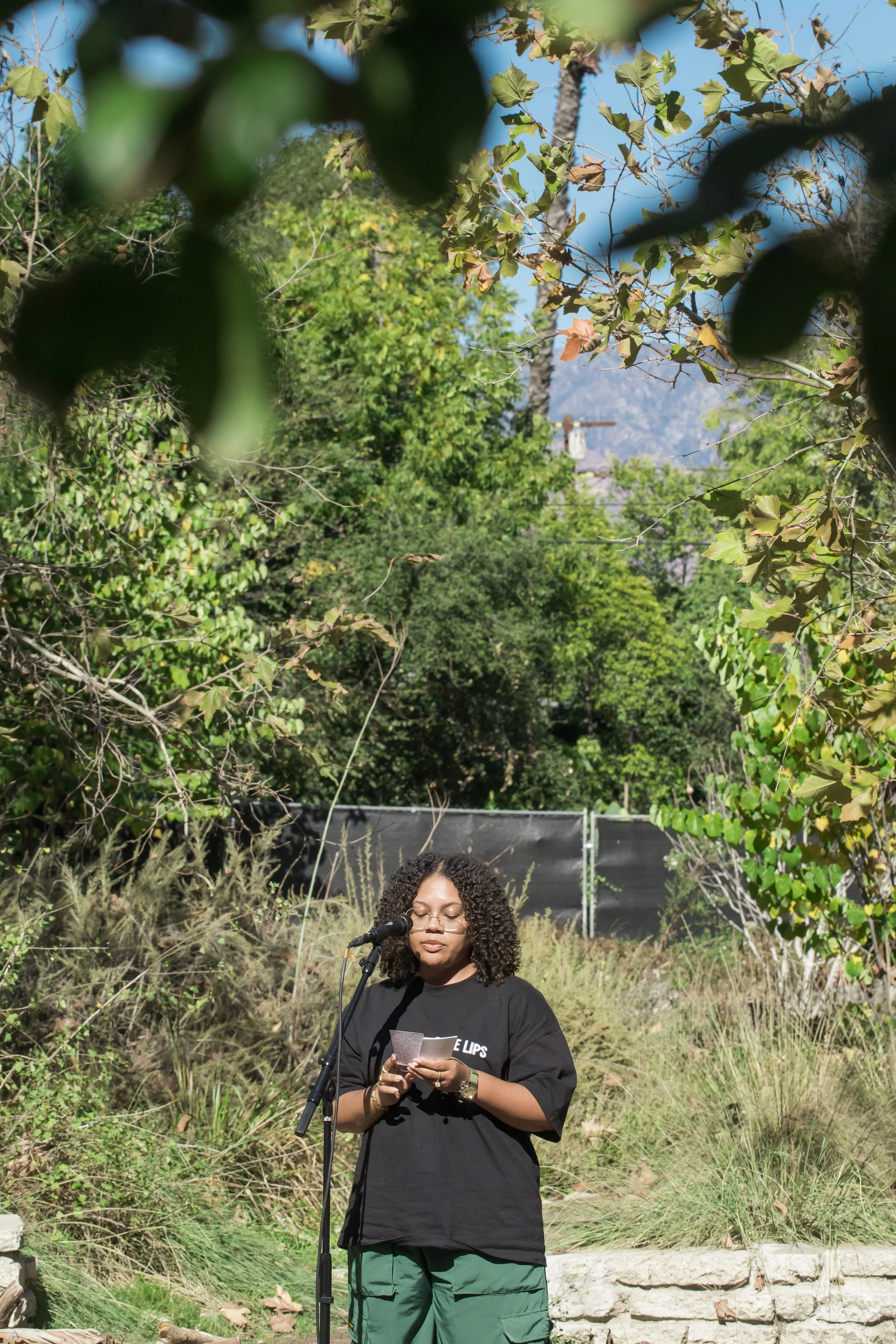
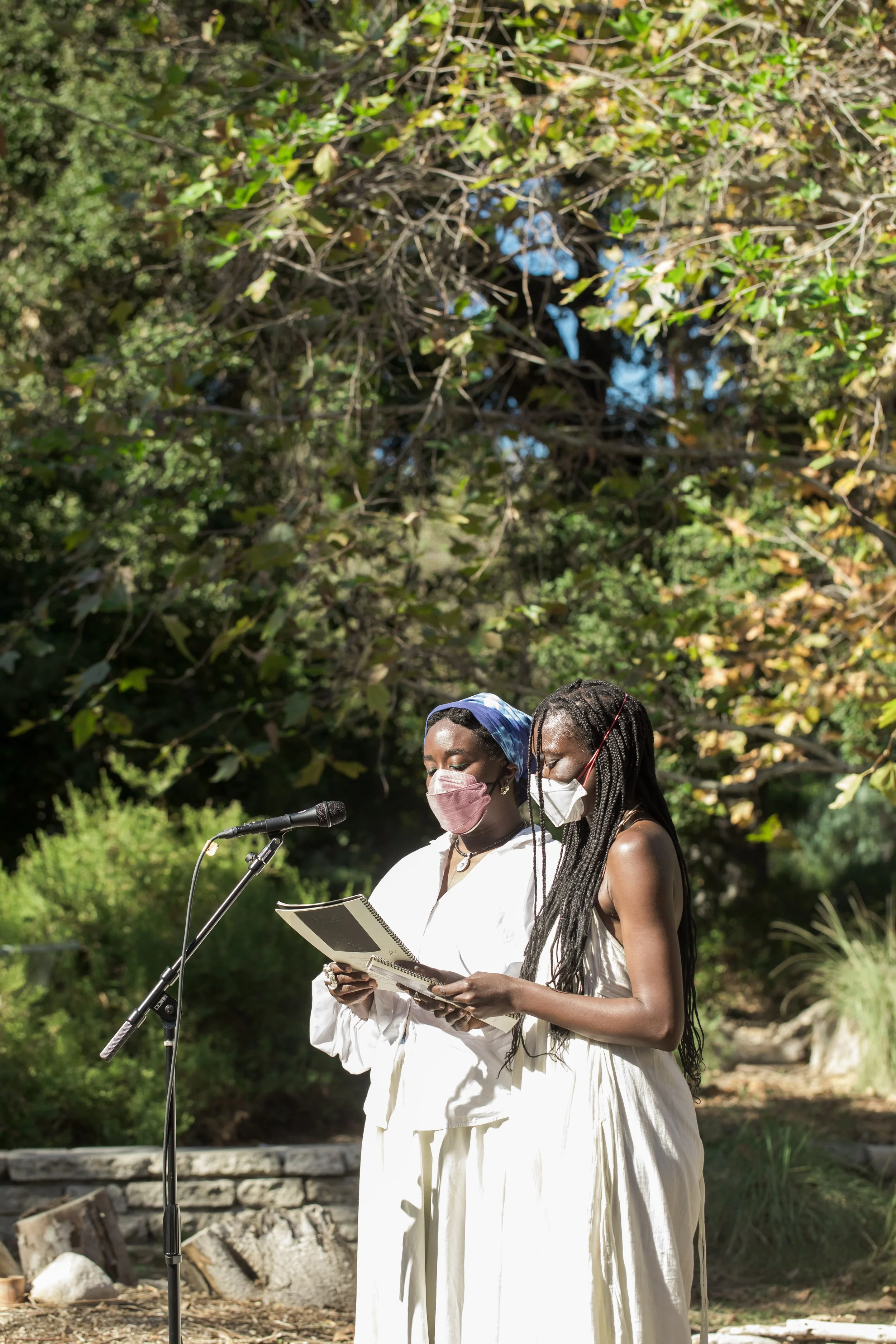
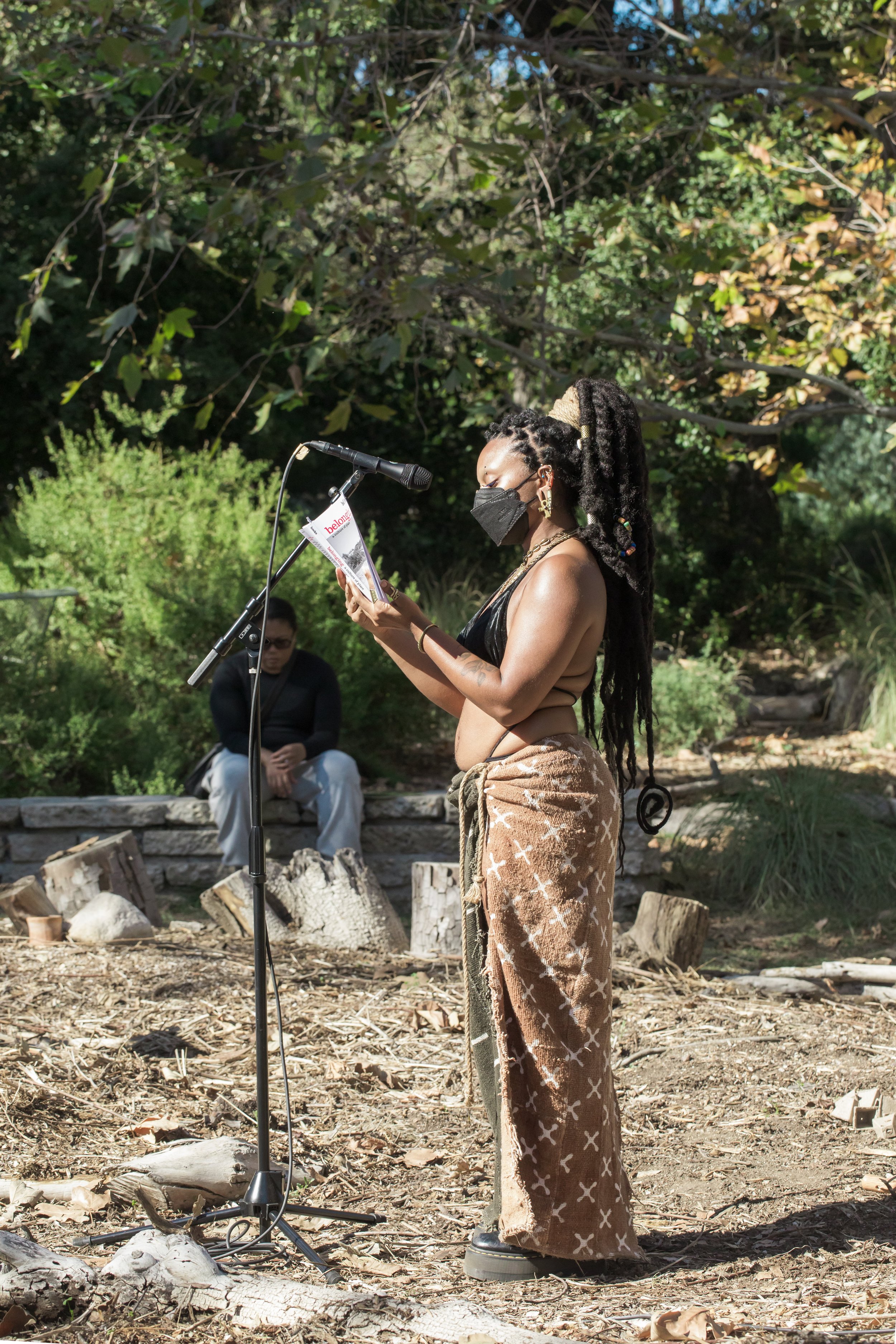
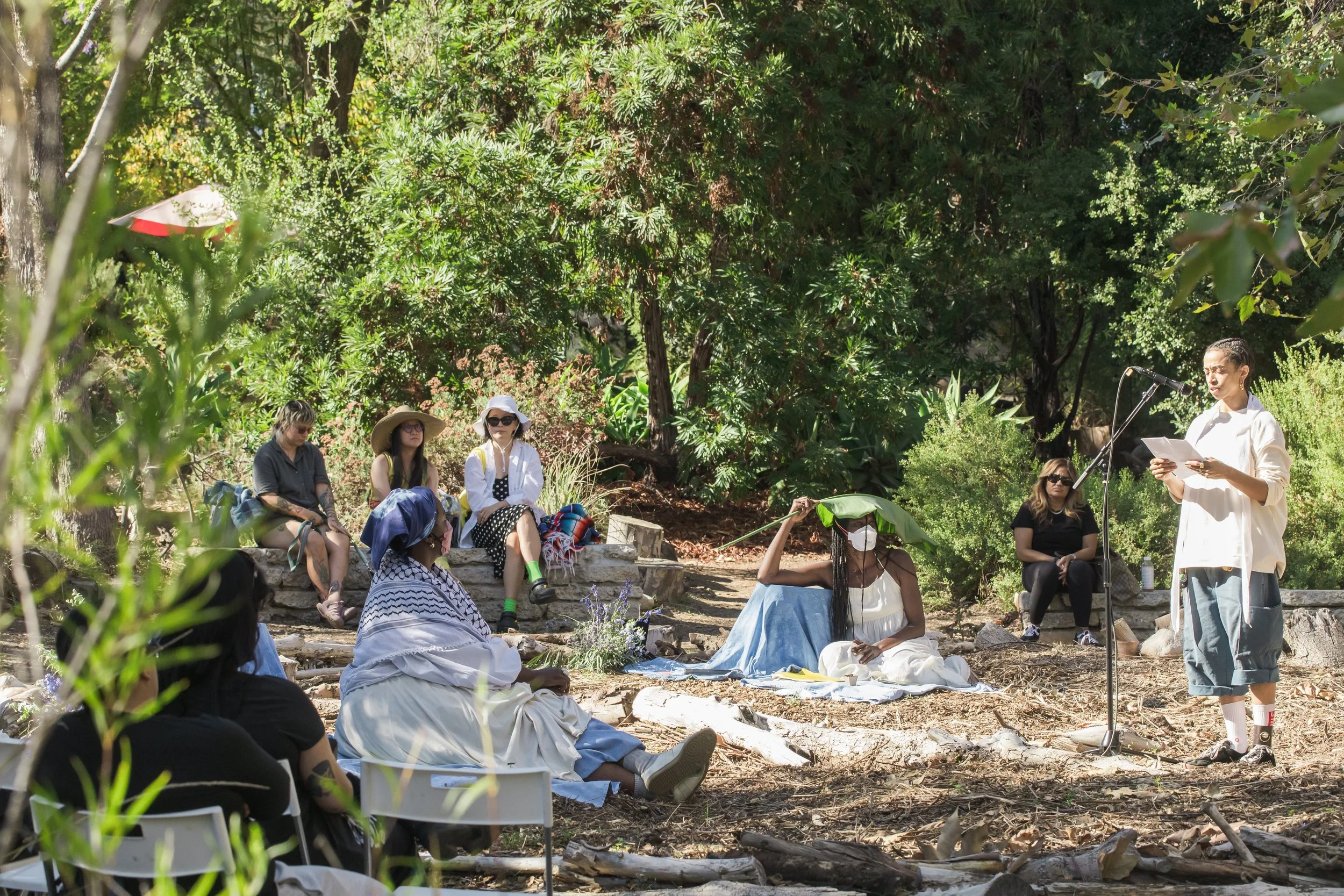
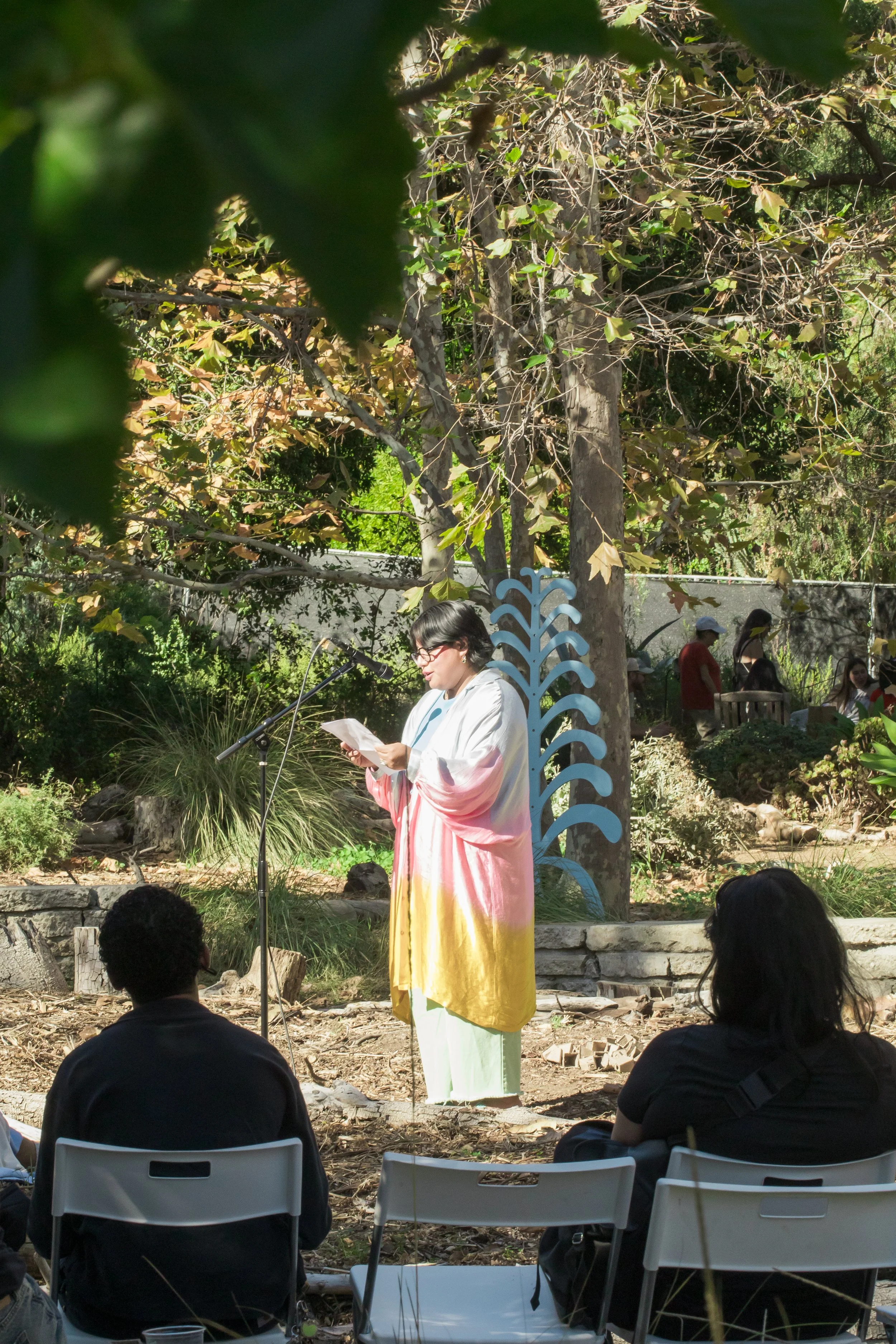
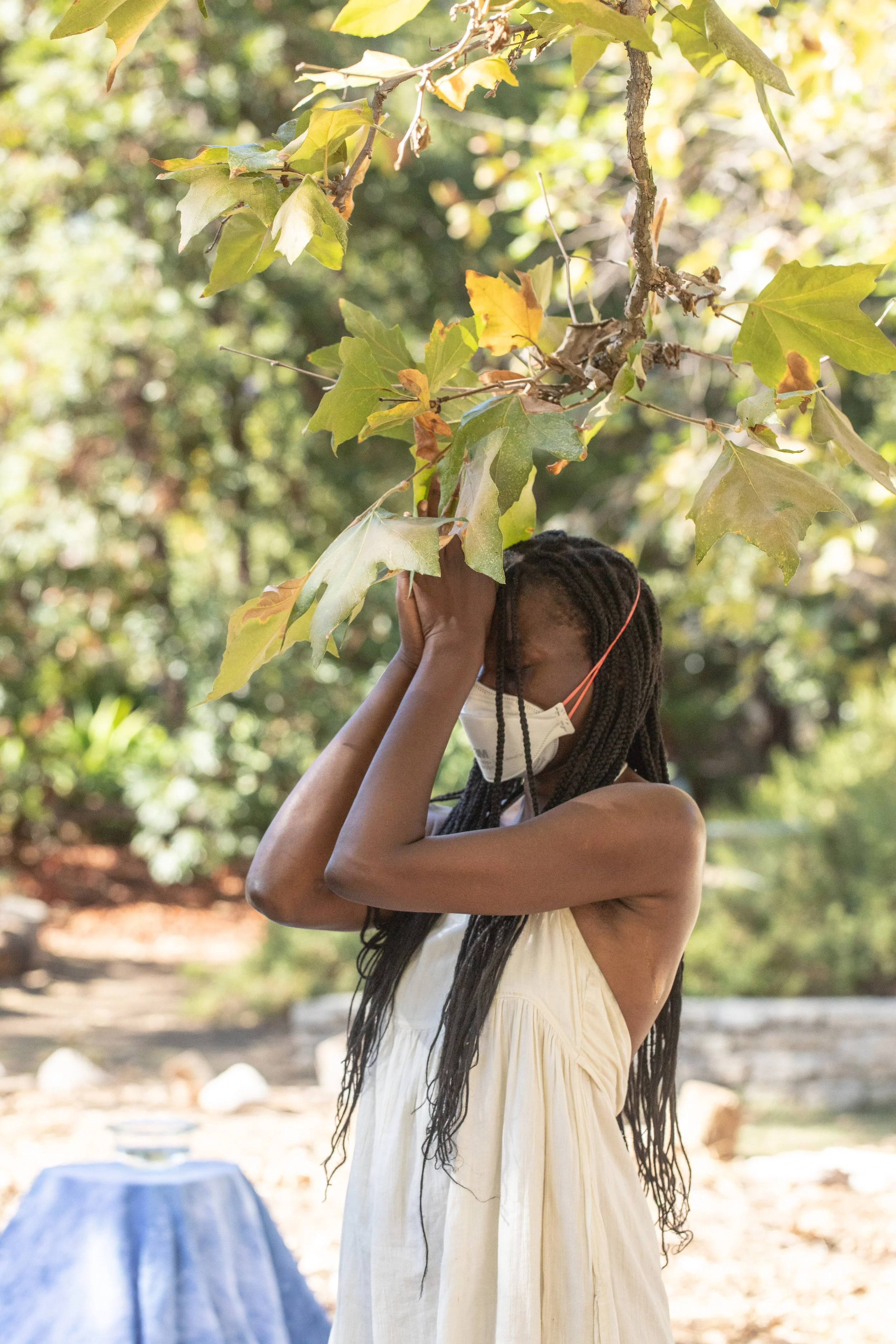
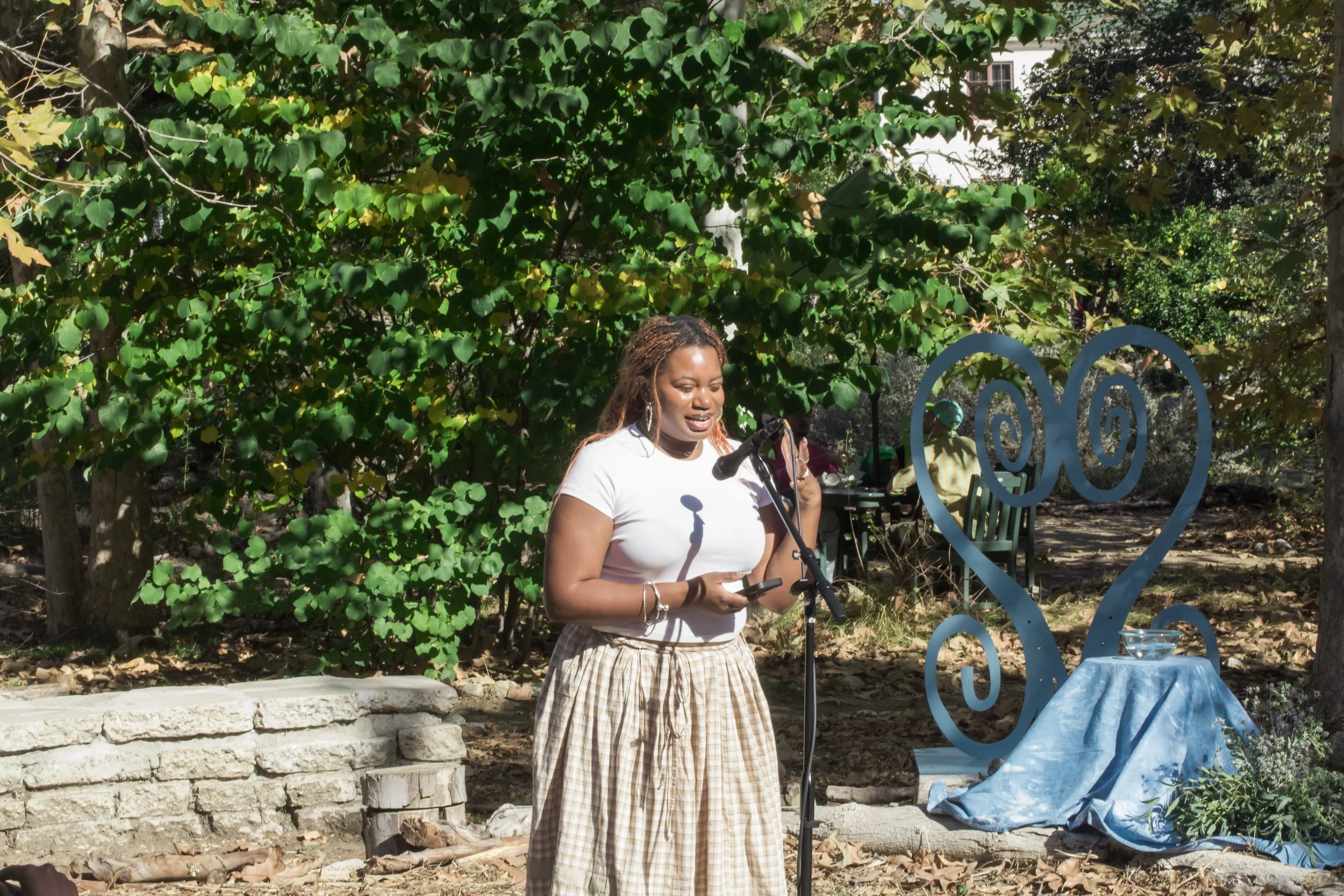
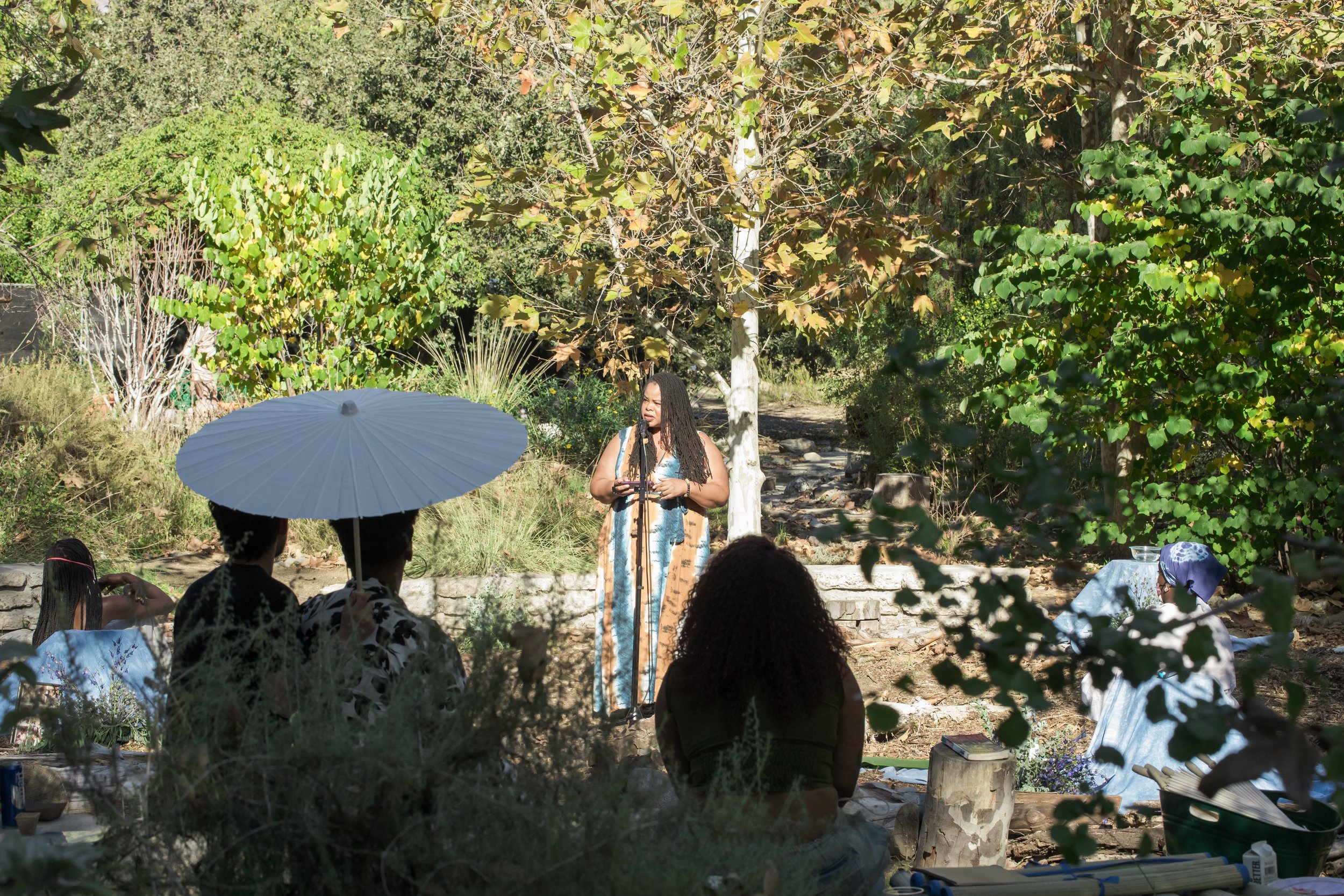
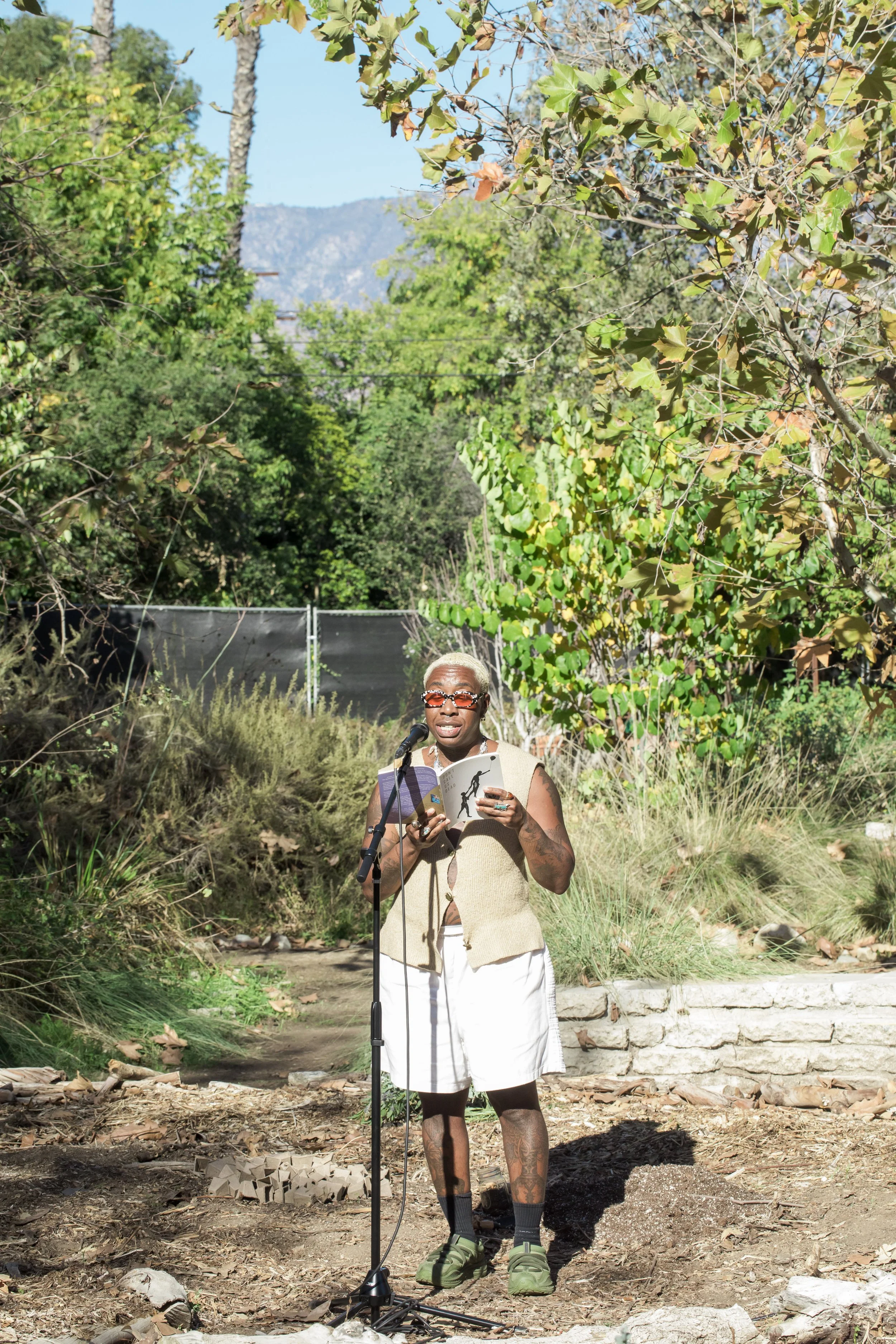
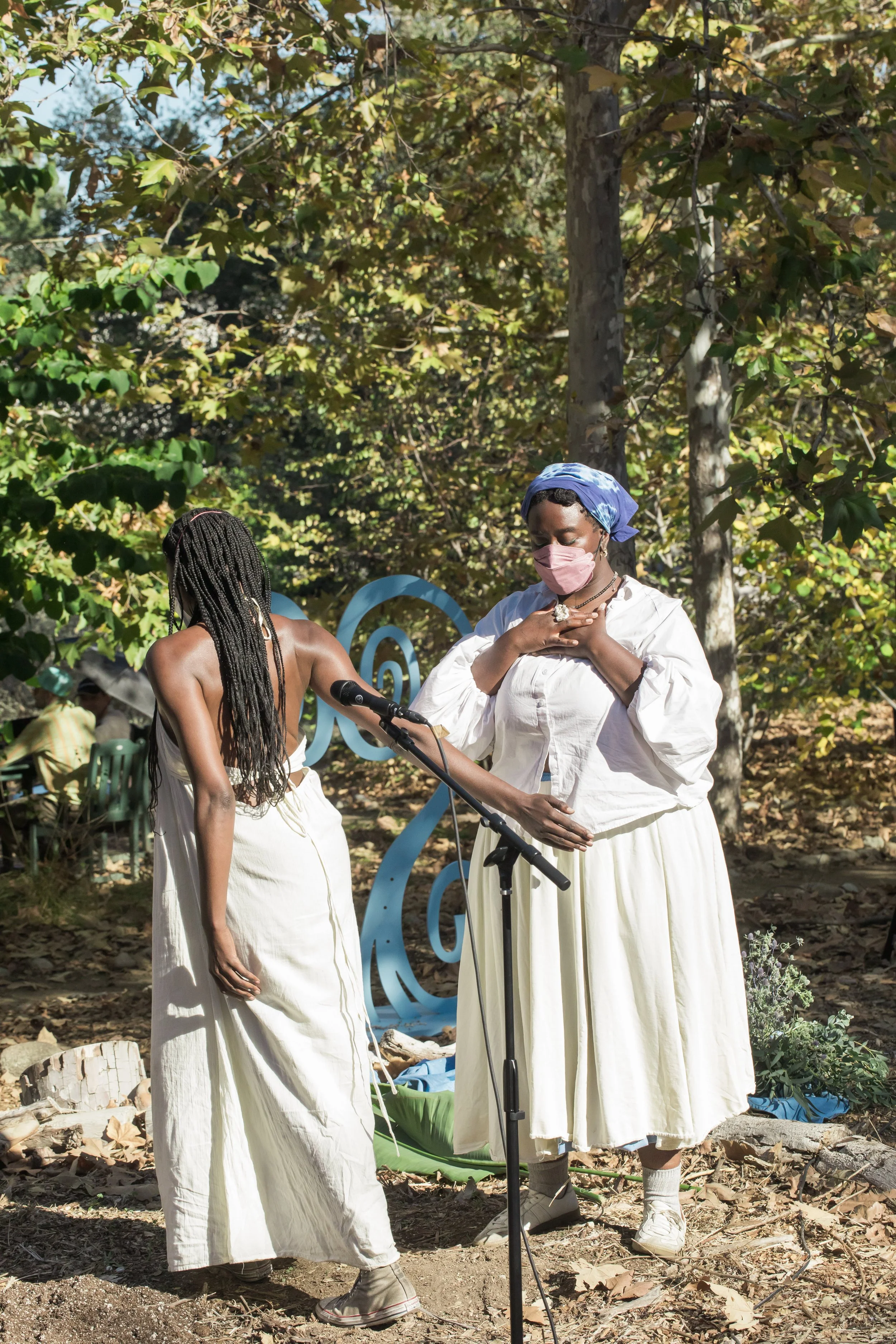
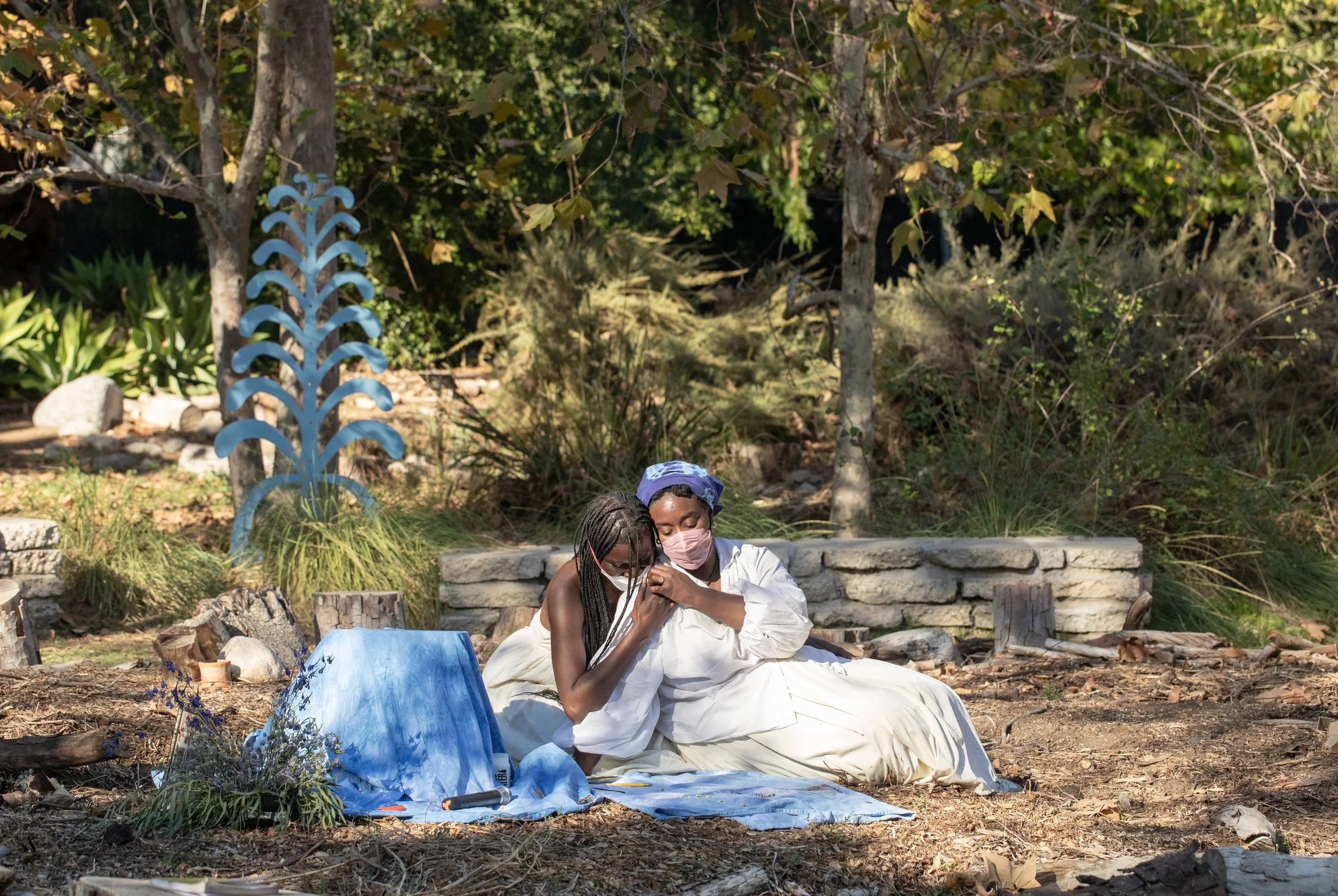
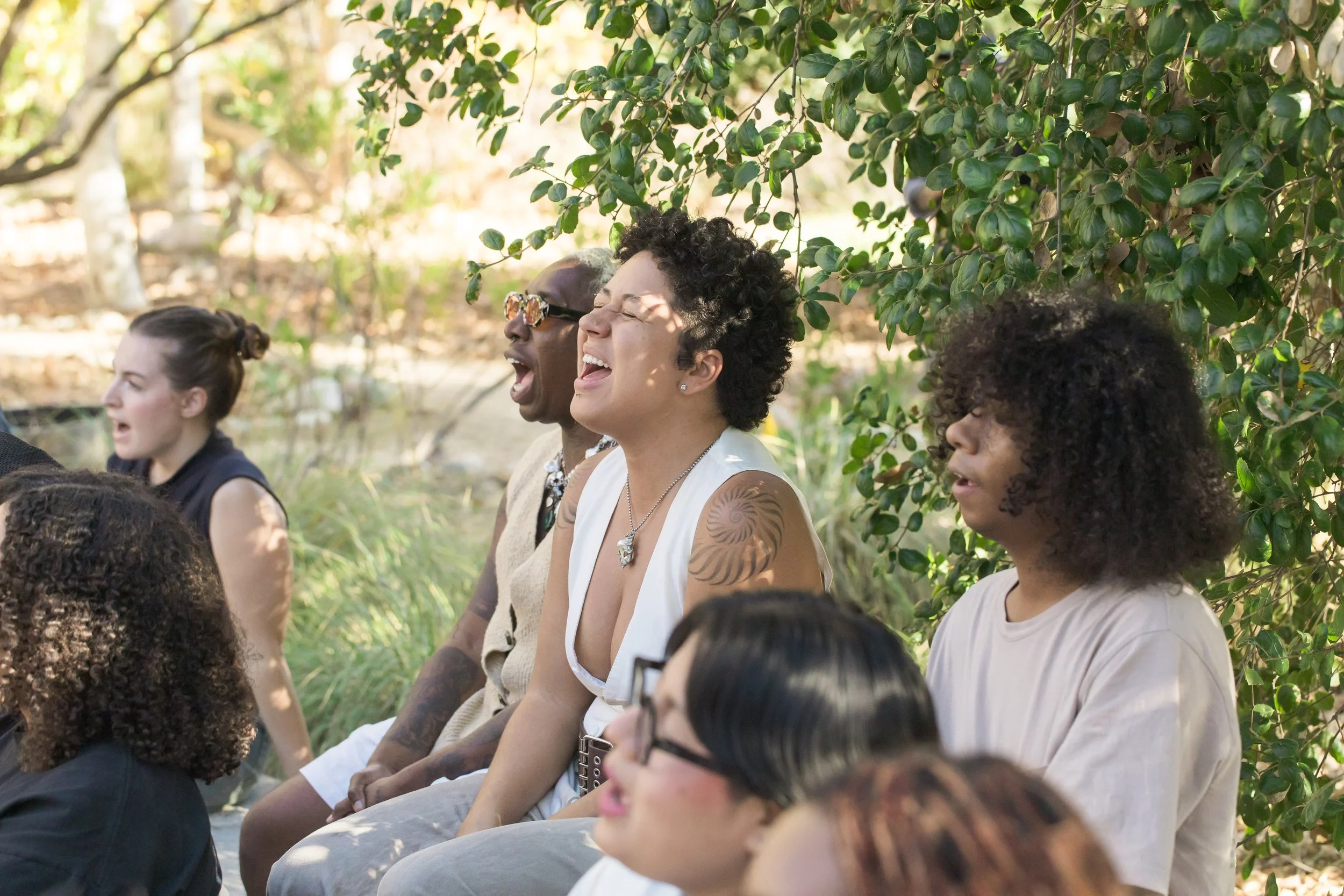
images by Gina Clyne
It is a prayer that a lament as a series can functions as both a temporary monument and a living process: a space to collectively name what is broken, to honor what has been lost or purposefully forgotten, and to ask how futures might be built within and beyond the conditions we inherit.